If ever there was a character trait that was desperately needed to be understood, taught, demonstrated, imparted, modelled and pursued, it would be humility. Yet, almost ironically, it is the most avoided and least spoken about, possibly because most leaders and pastors probably feel a certain apprehension about being hypocritical, knowing that they themselves have not yet mastered the low road of true humility. But if mastery is the permission we need to talk about a desirable trait, we all ought be silent.
So, can we talk about humility while also recognising we are still on the journey towards truly deep and Christlike humility? I think we can, and I think we must.

I sat around the fire recently with a group of men, men that have committed their lives to the ever constant process of renewal, of iron sharpening iron, in our shared pursuit of Christ and his Kingdom. We meet each week to share our journeys, our trials, our victories and to confess our failures, pray together and enjoy rich fellowship in the Presence of God. Many deep and heartfelt conversations happen either around the fire, or at a table, together.
On one such occasion the topic of humility came up.
What is it? How important is it?
How do we become more humble?
What does it mean that God opposes the proud but gives grace to the humble?
How could Moses write about himself and say he was the meekest, or most humble man to ever live, without being arrogant?
As the conversation flowed I was keenly aware of the presence of God in our midst, as he took up residence with us. We agreed that Moses wasn’t perfect, yet he was humble, and talking about his own humility didn’t violate that, so we too ought to be able to talk about it, and our pursuit of it, without tripping over our own ego. What followed was deeply enriching conversation, and I’d like to share some of the gold that came out of that panning session.
We know what it isn’t

First we started trying to define humility, yet we struggled.
We all kind of knew what it was, but finding the right words was a challenge. Often, when something is hard to articulate or to boil down to a simple definition, describing what it isn’t can be much easier. So that’s what we did.
Humility is not Proud. The big picture perspective is that we know that pride is the opposite of humility, hence God opposes the proud but gives grace to the humble (Proverbs 3:34; James 4:6; 1 Peter 5:5). The two traits are in contrast to each other. Anything that is ego driven, self serving, full of self or arrogant is easily picked off as not being humble.
Humility is not Natural. Due to our sin nature, being humble doesn’t come naturally. True humility is other-worldly, it comes from heaven, from our union with Jesus. Only Jesus can truly make us humble. This means we have to work at being humble, and we also need the empowering grace of the Holy Spirit to make our efforts effective. No one is born with humility, the default setting in our humanity is self; self-centred, self-serving, self-promoting, humility requires the death of such things.
Humility is not always an Expert. One thing we discovered as we shared stories and discussed humility was this common theme of people who present themselves as having something still to learn.
Even if a person is an expert in their field, a humble person will listen to whoever is in front of them with the posture of a student, open to learning something.
A humble person is the opposite to a know-it-all, humble people listen, not just while they wait their turn to talk, but they listen with intent to learn from you. One of the great turn-offs in a conversation is when you can tell the other person is closed off to you, has no real interest in your opinion or perspective; they’re too proud to learn from you.
A great example we thought of was an interview Elon Musk did a while back, where a YouTube journalist asked Musk about a design decision regarding a Space-X rocket. Regardless of your personal opinion about Musk, in this moment Musk listened thoughtfully to the journalist’s question, admitted he hadn’t considered the perspective being offered, and went away and initiated changes based on that conversation! Even though he was the expert, Musk was still open to learn from anyone.
This quality of remaining teachable makes people attractive because it demonstrates genuine humility.

Humility is not Weakness: In Australian culture, and likely many other cultures, humility is often thought of as weakness. We each shared stories where someone had been ridiculed for not fighting back, or for being kind to a stranger or coworker, or for not retaliating or taking revenge. Such demonstrations of restraint and compassion, which we agreed were aspects of humility, we often viewed as weakness. Yet with Christ as our example, we know that to be humble has nothing to do with weakness, but strength under control, which leads to our next thought.
Humility is unconcerned with status, title or honour: it’s just hard to imagine a truly humble person being focused on their social status, checking how many followers they have, and ensuring their proper title is used. Like those who insist on being called ‘doctor’ so-and-so because they have a PHD, despite not being a medical doctor. Why the need for the title? It serves only the ego and the self conceived importance that comes from it. Those who are humble show more concern for others, for those around the and less for themselves.
Jesus never corrected anyone for calling him by the wrong title, some called him lord, others the son of David, others simply used his name, Jesus. It hurts when you lose a position or a title, maybe a job or a promotion, but it’s the ego that hurts, the self that is wounded. True humility is uninjured by the loss or lack of such periphery things. Any pain we feel when honor is withheld, or titles are not handed out, or are removed, or ignored, is simply a symptom of our pride being chipped, something we ought embrace and lean into and not resist.
Humility is not Fair: When Jesus ‘humbled himself, even unto death on a cross’, as Paul reminds us in Philippians 2, Jesus suffered immensely and unjustly.
It wasn’t fair what Jesus went through.
It wasn’t fair that he came to his own and they rejected him; we rejected him.
We are so often concerned with what is right and fair that we are too preoccupied with self-centered justice that we’re not capable of humility.
We cannot be humble while focused on life being fair. Jesus models this with perfection.
The humble person is the one who can endure injustice and suffering without raising an alarm and making a fuss, like a silent lamb before the slaughter. The humble person isn’t complaining about what they deserve; respect, honor, accolades, payment… they entrust themselves to care and provision of the Lord and endure hardship joyfully. Now that is a high bar! And this is also why, I think, few pastors ever talk about it, because few have attained this kind of humility in their lives. But we ought not wait until we arrive before we talk about where we are aiming to go.
How important is the cultivation of humility?

“God opposes the proud but gives grace to the humble.””
James 4:6 ESV
This one verse alone highlights that humility is certainly of reasonable importance, and it also shows that humility can be assumed to increase proportionally at the rate that pride decreases.
Simply put, you cannot grow in humility without simultaneously becoming less proud. Pride and Humility occupy the same room in the heart, in order for one to increase, the other must decrease.
If pride is not being reduced, the only humility increasing is a false-humility, which is usually self serving, and is therefore actually pride by another name. True humility will always see the reduction of pride.
Let’s consider a few more scriptures:
1 Peter 3:8 Finally, all of you, have unity of mind, sympathy, brotherly love, a tender heart, and a humble mind.
1 Peter 5:5-6 Clothe yourselves, all of you, with humility toward one another, for “God opposes the proud but gives grace to the humble.”. Humble yourselves, therefore, under the mighty hand of God so that at the proper time he may exalt you
It’s fascinating to see that Peter, who was once so brash, running his mouth up and down, writes as an older man about the importance of developing authentic humility. Age and humility tend to be related, but not automatic. The command from the Apostle Peter is to humble yourself. Take actionable steps towards greater depths of humility. For the Christian it’s not optional, it’s a command; humble yourselves.
Matthew 18:3-4 Truly, I say to you, unless you turn and become like children, you will never enter the kingdom of heaven. Whoever humbles himself like this child is the greatest in the kingdom of heaven.
Jesus very clearly points out that greatness in his Kingdom is directly related to the level of humility one is willing to cultivate. Again, the process requires our active participation, humility is a fruit of the spirit, not a gift, it must be produced, not received.
In order to illustrate his point Jesus takes a young child and puts the child in the midst of his disciples instructing them to become humble like the child. But this raises more questions, a moment ago I was gleaning from Peter that his old age had contributed to his development of humility, yet here Jesus points us to learn from a young child, and we all know that by our definitions that children are not humble. We’re all too familiar with the selfish screams of children: ‘Look at me! look at me! That’s mine! I want it! Give it to me!’
Children are not born humble, not in the way we’ve been describing humility, so what is Jesus getting at? What kind of humility can we learn from children? It’s about submission and the laying down of our rights.
Like a child

A child, in Jesus day, was no different in many ways to children today; self centred and full of immaturity. But we want neither of these traits as we follow Christ, so what else is going on?
Children in 1st Century Israel had no rights.
They were taught, or better yet, made, to be obedient, to do as they were told, to suffer the injustice of not getting a say in how their lives would be run.
A child’s parents called all the shots, even arranging their future spouse and career.
Children, from a young age, had to contribute to the family, with most boys starting to learn the family trade from 12 years old and most girls preparing for motherhood and homemaking as they approached the ripe young age of 15 for marriage. Such marriages were arranged by the parents. The children had little say, if any.
Children were humbled by the circumstances of life and the sovereignty of their parents rule over their life; this was normal, and expected. ‘It’s not fair’ was not something these children considered a good argument like children today do when they have their phone taken off them or are sent to bed before midnight.
Children today are entitled, disrespectful, disobedient and are selfish and greedy beyond measure. In many respects, while children are no different in terms of maturity and selfishness, children today are almost an entirely different species to children in Jesus day. They’re not being humbled, they’re being spoiled.
Jesus was not using a child to say ‘have faith like a child’ as many might suggest, as Jesus makes no mention of faith. Catch that? Jesus never commands us to have ‘faith like a child’. Having so called ‘child-like faith’ is an idea of modern invention. Jesus was in fact answering a question about who is the greatest, and his response is, “whoever is the most humble”. Read it again for yourself:
“At that time the disciples came to Jesus, saying, “Who is the greatest in the kingdom of heaven?” And calling to him a child, he put him in the midst of them and said, “Truly, I say to you, unless you turn and become like children, you will never enter the kingdom of heaven. Whoever humbles himself like this child is the greatest in the kingdom of heaven.”
Matthew 18:1-4 ESV
D. A. Carson, in the Expositors Bible Commentary points out, The child is held up as an ideal, not of innocence, purity, or faith, but of humility and unconcern for social status. Jesus advocates humility of mind (18:4), not childishness of thought (cf. 10:16). With such humility comes childlike trust (cf. TDNT, 8:16–17)
The humble one is the person who, like a child, is able to live as one without rights, who is subject to the sovereign rule of the Father, accepting what is given and taking responsibility to use all that is available in the service of God and the building of a good life. This is why so many other parables of Jesus explore the relationship between servants obeying their master. Submission to God is a key part of humility and greatness.
The Lord gives, and the Lord takes away, blessed be the name of the Lord.
As a child looks to the hands of his father, asks with expectation of good things, works diligently, is respectful, so are we to take the humble position of being subjected to our Father in Heaven who rules sovereignly over all creation.
Christ descended into humility
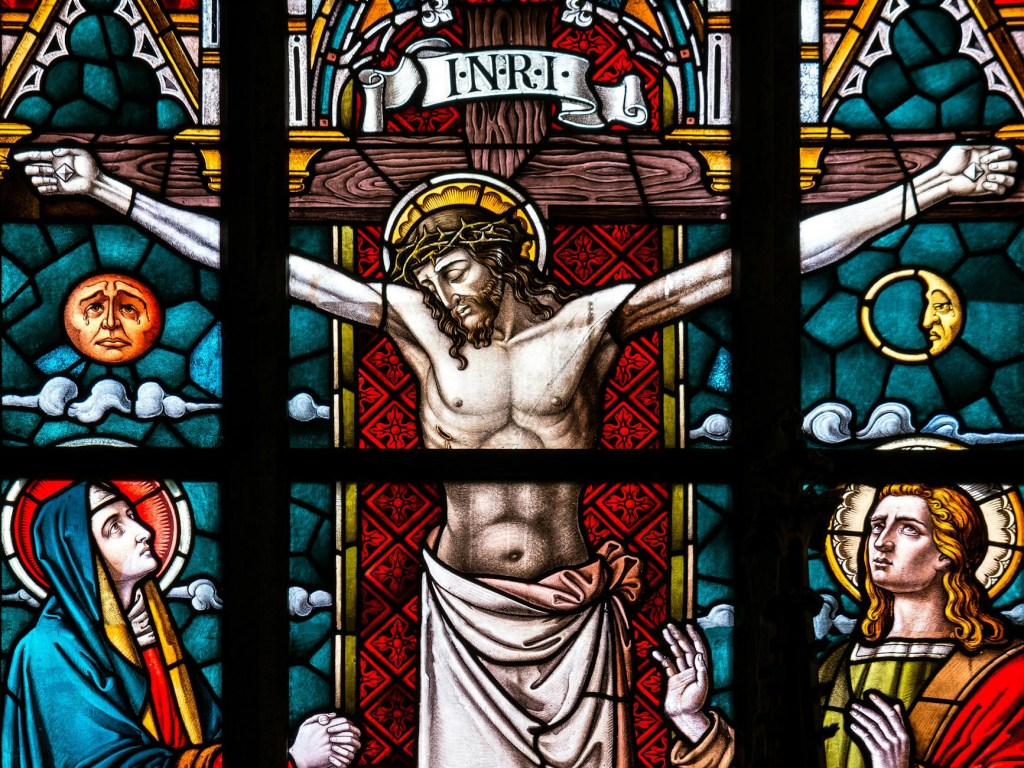
Consider Paul’s description of Christ’s humility:
“Do nothing from selfish ambition or conceit, but in humility count others more significant than yourselves. Let each of you look not only to his own interests, but also to the interests of others. Have this mind among yourselves, which is yours in Christ Jesus, who, though he was in the form of God, did not count equality with God a thing to be grasped, but emptied himself, by taking the form of a servant, being born in the likeness of men. And being found in human form, he humbled himself by becoming obedient to the point of death, even death on a cross.”
Philippians 2:3-8 ESV
Here we see Paul linking this idea of willing suffrage, of obedience, to the point of pain, specifically to the point of death; the ultimate humiliation.
Some scholars see this as Jesus’ most extreme example of humility, while others see the incarnation as the most extreme; the God of Heaven, putting on flesh and dwelling among us as a baby in a feed trough. 33 years later, Jesus, the Son, demonstrates his humility by being fully subject to the will of the Father and willing to die a criminals death for the sake of sinners.
Both the incarnation and the death of Christ serve as bookends for the exemplary life of humility.
Jesus modelled what it means to became like a child, quite literally, then he died the most unjust death in the history of the world; the most innocent of men dying like a criminal, forgoing his rights, silently accepting suffering, trusting the Father and not complaining that life isn’t fair.
This was his lot, he accepted it, saw through the cross to the other side and humbly embraced the will of the Father. ‘Oh what a Saviour!’
Now we get a sense of humility being dovetailed with humiliation. Jesus’ humility wasn’t just him being meek, and gentle, or by not being some boasting, bashful, man. Jesus was humble as he embraced being humiliated. He was taunted, ridiculed, dressed in purple, spat on and a crown of thorns pressed into his head while soldiers mocked him, ‘hail, king of the Jews!’ The humiliation of Christ.
How do you handle humiliation? Being mocked for following Jesus? I know I need to handle it better, my ego still needs to die a lot more than it has.
How do you respond to ridicule, or being taken advantage of? Every bone in my body wants to cry out of justice! When people do wrong by me my flesh wants to cry out as a victim and have people rush to my aid with sympathy, validating my sense of injustice. But that’s not the Way of the One we follow.
Jesus demonstrated his humility by maintaining his composure throughout his humiliation, he was never a victim, he was never disempowered, he spoke no evil and proved himself worthy of his own teaching, turning the other cheek and not returning evil with evil. He embraced humility and endured humiliation. This is a unique and rare quality that God longs for us to develop so we can be truly great in his kingdom.
Refuse to be humble, & be ruined

So Moses and Aaron went in to Pharaoh and said to him, “Thus says the Lord, the God of the Hebrews, ‘How long will you refuse to humble yourself before me? Let my people go, that they may serve me. Exodus 10:3 ESV
What was the one thing that ruined Pharaoh during the time of the exodus? The lack of humility. He refused to yield to the Lord. He refused to cede control and authority. Pharaoh refused to humble himself, so God did it for him.
Scripture is clear about the consequences of refusing to humble yourself:
Psalm 147:6 The Lord lifts up the humble; he casts the wicked to the ground.
Isaiah 2:11 The haughty looks of man shall be brought low, and the lofty pride of men shall be humbled, and the Lord alone will be exalted in that day.
Deuteronomy 8:2 And you shall remember the whole way that the Lord your God has led you these forty years in the wilderness, that he might humble you, testing you to know what was in your heart, whether you would keep his commandments or not.
God hates pride.
He hates haughty eyes and an arrogant look (Pr 6:16-17). Haughty eyes are those that look down at people, thinking themselves better than others. Haughty eyes look at others with disdain and superiority; pure arrogance and inflated self-importance.
The Lord has no place for pride his people, for pride in the heart is the rejection of God, for as we’ve said, pride and humility occupy the same room in our heart, one must decrease so the other can increase.
To have pride in our lives is to dethrone the Lord, or at least to attempt to.
Pharaoh refused to let go of his pride, so God pressed him until he yielded. God had to actively humble Pharaoh and show him that he was no god, that he had no power, nor could he contend with the Almighty.
Throughout the exodus, Israel was constantly being tested, monitored, and tried. The Lord was seeking to produce humility in Israel, so for 40 years God worked to cultivate humility, and more often than not, the people resisted, so they failed to enter the promised land, and even when they did enter, the cycle throughout the Old Testament continued.
God loves us too much to allow us to live with the toxin of pride slowly poisoning our hearts. It is because of his love for us that he seeks to purge pride from our hearts and make us more like Him. It is a painful process, but a necessary one.
Pride resists God, it rebels against God, it wants to rule and be in charge, pride thinks it knows best and pride wants its own way.
Pride is completely incompatible with a life of mature discipleship and sonship, and if we will not seek out the removal of pride ourselves, if we will not freely and willingly seek out ways to humble ourselves, God will humble us himself.

Moses was humbled; he was driven out from the luxury of palace life to spend 40 years in the wilderness looking after sheep before returning to lead Israel out of slavery… only to spend another 40 years in the wilderness.
Joesph was humbled; his brothers had had enough of his arrogance and ego, so they faked his death and sold him as a slave. If that wasn’t enough, Joseph also went to prison, falsely accused of attempted rape. It was humiliation after humiliation. Eventually, God brought him into the palace once he was humble enough to carry God’s heart and wisdom.
David was humbled; he gained notoriety as the giant slayer, but then was forced to spend decades living on the run, for fear of his life. He was anointed by Samuel to be king, but the road to the palace was painful, lonely and full of rejection by king Saul, his own father in law.
Pretty much all of the prophets lived humiliating lives, especially during exile while God was humbling the entire nation by allowing foreign armies to conquer them.
In the Gospels we read that Zechariah was humbled when he first did not believe the angel telling him his wife would have a son, who would grow up to become John the baptiser. Zechariah was struck mute and unable to speak for the duration of the pregnancy, lest his pride-fuelled unbelief came out of his mouth.
Peter was humbled when the rooster crowed.
Paul (Saul) was humbled on the road to Damascus.
Eventually, most, if not all, the apostles died as martyrs, the final humiliation.
Think of your favourite people, the Christian examples you look up to. How many of them were not humble? I dare say all of them were!
We know humility is a key trait, if not the key trait that the Lord wants us to develop in our hearts and express in our behaviour. Perhaps this is why it’s such a taboo subject to talk about, the enemy would love nothing more than for God’s people to resist humility and talk about other things.
Humility just isn’t high on the list of things we want to become. Why? Because we all want to be like Jesus the teacher, explaining revelation, or Jesus the healer touching people and seeing them restored, or a Jesus the miracle worker performing signs and wonders. We want to be Jesus the wisdom dispenser sharing deep knowledge and truth with eager listeners, or Jesus the storm silencer, bread multiplier, or my favourite, Jesus the water into wine maker! But deep in our flesh, with all the energy of the old nature that remains, the old self desperately wants to avoid being like Jesus the crucified and suffering servant.
We want resurrection, but not death, we crave glory, but not humiliation.
The death of self is the greatest foe our flesh will face, and so our flesh fights against this humiliating death with all it has, but since it stands condemned, we ought agree with God and put the old self to death. This is repentance; taking God’s side against your self.
Consider Paul’s attitude towards suffering and loss as he wrote to the Church, in Philippi,
But whatever gain I had, I counted as loss for the sake of Christ. 8 Indeed, I count everything as loss because of the surpassing worth of knowing Christ Jesus my Lord. For his sake I have suffered the loss of all things and count them as rubbish, in order that I may gain Christ 9 and be found in him, not having a righteousness of my own that comes from the law, but that which comes through faith in Christ, the righteousness from God that depends on faith— 10 that I may know him and the power of his resurrection, and may share his sufferings, becoming like him in his death, 11 that by any means possible I may attain the resurrection from the dead. – Philippians 3:7-11 ESV
Humility is the willingness, dare I say cheerful willingness to suffer with and alongside of Christ. This kind of suffering is most often the suffering of self-death, not of persecution.
Put your self to death therefore…

Luke 9:23 And he said to all, “If anyone would come after me, let him deny himself and take up his cross daily and follow me.
Galatians 5:24-25 And those who belong to Christ Jesus have crucified the flesh with its passions and desires. If we live by the Spirit, let us also keep in step with the Spirit.
Colossians 3:5a Put to death therefore what is earthly in you
The old self must remain crucified with Christ.
This is the great battle of the flesh. This is the root cause of every sin and failure in the life of every Christian, that there is still a remnant of the old nature clinging to life within us, and not until Christ returns will we have final and complete victory of it. Sin isn’t the result of temptation that is external to us, but of our disordered desires, as John-Mark Comer would say, being acted upon, or as James puts it, “each person is tempted when he is lured and enticed by his own desire.”
James 1:14 ESV
Each day we have a choice, to live for Christ on the pathway towards greater humility, or to live for ourselves. To be honest, most days I feel like I have a foot in each camp, trying to live two lives. Thank God for his mercy!
His love and holiness shows me how far I still have to go, his mercy and grace shows me that I am forgiven and accepted where I am. Humility is accepting mercy, and then using it as fuel to humbly become the Saint he says we already are in Christ. We are not seeking to live up to a set standard, but to live from a standard Christ set upon us with grace.
Developing humility is a painful process, yet Jesus shows us that there is joy and intimacy with the Father at such deep levels, that the pain can be eclipsed. It’s worth it. Nothing worth having is free, cheap or easy. Humility is no different.
It is out of selfless, generous love that Lord humbles us.
It’s because he’s a good father that he seeks to liberate us from the old nature.
It’s his kindness that convicts us and leads us to repentance.
It’s his goodness and mercy that strengthens us to endure hardship and enables us to rejoice when we suffer. Why does he do it? So we can become increasingly more like him, and less like the world. So we can think his thoughts, hear his heart, and speak and act on his behalf with greater purity in our motives and more sincere love in our actions.
Our Father longs to exalt us and raise us up, but the way up is the way down; he who humbles himself will be exalted.
What it is

Humility, as revealed in the person of Christ, and as experienced in our lives, is attractive.
Humble people are the ones you want to spend more time with, to learn from, to be like. They make you feel good. We talked about what humility isn’t, and how important it is, and how Jesus pointed to a small child and how he himself is our most pure example; now for some dot points. Ask yourself as you slowly read through them, which of these resonate, which of these is convicting, which of these do you long for, and which of these do you see in yourself as being good fruit you’re bearing?
Humility is:
- Gentle: you cannot be humble and abrasive. Humble people are attractive, abrasive people repulsive. Gentleness is kindness and patience working together, makes people feel safe and seen.
- Quiet: you cannot be humble and an overbearing loud mouth; people are drawn to humility but repelled by loud, obnoxious people (volume is not the issue, but it is often closely associated, I’ve not met an abrasive, obnoxious person that was quiet and slow to speak). Proverbs 9:13 tells us The woman Folly is loud; she is seductive and knows nothing. Such people hide their ignorance behind their volume, shout people down and are bullies. Quiet people are gentle, gentle people are not weak doormats, but humble with strength under control. The crowd shouted ‘crucify!’ yet Jesus remained quiet.
- Willing to suffer loss: you cannot be humble and focused on what you deserve, such a view is self focused and therefore selfish. Humility turns the other cheek and goes the extra mile without complaint or victim-thinking. When we truly grasp that we have gained Christ, we cannot ever really lose.
- Seeking to learn: you cannot be humble and be a know-it-all. Humble people listen, seeking to hear and to learn, not just to speak and be heard. This is especially hard for leaders. Proud people are closed off to learning from those deemed ‘less-than’ themselves, be it in age, experience, knowledge, or perceived wisdom or title/position. The humble person is not just open to the possibility of learning, but actively seeks to learn from whoever is speaking, in fact, they invite the opinions of others.
- Strong: you cannot be humble and weak. It takes great mental, moral, and physical strength to resist the urge to fight back, retaliate, get even and put yourself first. Overcoming the flesh is not for the weak but the strong. Being humble is strength under control, not weakness like a doormat. Jesus could have called on the angels, or spoke a word and destroyed all of Rome; he was not weak, but in control, and chose to submit himself to the Father.
- Holy: As the great Andrew Murray said in his book titled ‘Humility’, the most humble person in the room will always be the most holy (pg67). One cannot grow in humility without it having a domino effect on behaviour, speech and motives, so much so that holiness can only ever increase at the rate that humility increases. You cannot be humble, yet living a habitually sinful life; that’s hypocrisy.
- Becoming Nothing: One of the guys around the fire commented that humility is seeing yourself as nothing without God, and capable of nothing apart from God, Andrew Murray would agree, since humility is the enthronement of God and the displacement of self. Jesus himself told us that apart from him we can do no good thing (John 15), much like a branch cannot produce fruit if cut off from the vine. Humility is embracing the dirt and dust of our DNA, of our nothingness, without falling into false-humility, which is fake. Humility asks along with King David, ‘What is man that you are mindful of him?’
- Becoming Something: On the flip side to becoming nothing, humility gratefully accepts the invitation from God to become a Son, a royal priest, a saint, and a vessel of the Holy Spirit! The humble person does not play down his strengths, but rather recognises them as gifts from God. By acknowledging and using the gifts we honour the gift-giver, the one who has come to make us more than we could ever have been on our own. God exalts the humble, and the humble allow him to, while seeking no credit or glory. The humble person knows how to say, ‘I am nothing, yet I am also something, and all that is within me that is of any worth is not of me, but is of Christ’.
- Refuses Praise from Men: You cannot be humble while accepting praise and glory from men, for it was Jesus who said, ‘How can you believe [claim to have great faith] if you receive praise from one another, yet make no effort to obtain the praise that comes only from God? – John 5:44. When we seek or receive praise from men, instead of only from God, we are self sabotaging, allowing the flesh to get its pride-feeding fix. We love to get praise, we like to ‘talk each other up’ and describe the keynote speaker with exaggerated language to make them sound amazing, and too often the key note speaker ‘accepts’ this and allows it to continue. We post photos and videos hoping for likes and comments that stroke our egos. The humble one needs so such praise. Jesus said it was the Pharisees who loved the best seats in the synagogue and the special greetings in the marketplace while the people swooned over them and fed their egos. The humble person gives glory to God, and deflects glory to God, refusing to be treated like royalty or some kind of ‘higher than thou’ class of Christian. This refusal to accept praise from men was demonstrated by Paul and Barnabas who refused to receive worship from those thinking they were gods (Acts 14). They may have been something in the eyes of men, but they also knew that without God, they were also nothing more than mere mortals, so they pointed everyone to Christ. This one is hard, especially in a social media driven landscape.
- Forgiving: As Jesus hung on the cross, he looked at those who drove the nails through his hands, and at the crowds who had shouted ‘crucify, crucify!’ and said, ‘Father forgive them’. In his moment of public humiliation and scorn, he forgave. As long as we refuse to forgive from the heart, the development of humility will be stalled. Holding a grudge, being bitter about some past offence or injustice you suffered will hit pause on the development of humility. I don’t recall who said it but I’ve read it somewhere recently, that we either grow humble or grow bitter, but you cannot become both; we must forgive as God has forgiven us. Ouch.
- Grateful: Thanksgiving is one of the ultimate expressions of humility, especially in dire situations and painful seasons. The ability to look up and over our own suffering and see that which we can be grateful for is a true testament of maturity. Practicing thanksgiving is one of the ways in which we can partner with the Holy Spirit in our own formation. Develop a grateful heart and you will develop a humble heart. Those who feel cheated, hard done by, never having enough, never content with life or what they have, will become resentful, jealous, envious and self absorbed. The trajectory of a thankless heart is towards being cold and hard, whereas the humble heart finds cause to give thanks in and through all things, partly because he knows he is nothing, and deserves nothing, and so any silver lining is a blessing beyond measure.
- Prayerful: To be humble is to recognise your place before God, and before men. It is to have a sober mind and to not think of yourself more highly than you ought. Such a person will come to the conclusion that due to their nothingness, they must therefore cling to God who is everything. There is a good reason that kneeling is considered an act of humiliation, and why Generals and Kings in victory would make their subdued enemies kneel before them in subjectivity. To kneel was to cede authority, to kneel was to submit, to kneel was to concede defeat and acknowledge your conqueror as greater than yourself. And so, we kneel in prayer. We embrace the joy of wilful surrender, making ourselves subject to the King of Kings. But it not just kneeling with our body, but of our soul, it’s the posture of a praying heart in surrender to the Lord. The one who does not pray is not submitted. A prayerless person, therefore, is rebellious, self reliant, resistant to the Lordship of Christ regardless of any confession of Jesus as Saviour. Such a person may want Jesus to save them, but not to rule over them. A prayer-less Christian is like a plastic plant; all show, but no life. It’s interesting here to note, that Moses, the most humble man to ever live (other than Jesus) was the man of the most intimate prayer and communion with God, so much so that he spoke with God face to face and even shon with the Glory of God!
- Achieved in Community: You cannot grow in forgiveness if you are isolated from people who might offend you. You cannot grow in patience if you never have to wait for anyone or anything. In fact, all the desirable traits we see in Christ are developed in us only to the degree to which we are willing to live our lives openly with others. Iron sharpens iron, and so one man (or woman) sharpens another. Humility can be faked at a distance, but not up close. Those who seek to grow in deep humility can only do so through willingly engaging in rich fellowship. Alone I can pull the log out of my eye, but if there still remains a spec in my eye, I will need to loving and careful help of another to have it removed safely. Those who distance themselves from others, especially through hierarchy and leadership, are dancing with pride, closed off to the love of God that seeks to make contact through others. You cannot be humble if you live alone, or isolated, or disconnected, you can only presume to be humble. True humility, like love, is an interactive trait, which is why God is triune, having always existed as a sacred community showing love, humility, preference and honour to each member of the Godhead. The more untouchable a person becomes, especially a leader, the less humble they will certainly become as well.
We could probably name every positive trait desirable by a believer, any trait we see in Christ or revealed to us in the person of the Holy Spirit or the Father. Such a list might go on forever; I digress.
As we sat around the fire discussing these things, we kept coming back to the simplest of definitions; love.
True, Christlike humility, is the fruit of love, while true and authentic love will always work through humility. When we read 1 Corinthians 13, the great ‘love’ passage, it’s not hard to imagine we could replace the word ‘love’ with humility.
If I speak in the tongues of men and of angels, but [I am not humble], I am a noisy gong or a clanging cymbal. And if I have prophetic powers, and understand all mysteries and all knowledge, and if I have all faith, so as to remove mountains, but [I am not humble], I am nothing. If I give away all I have, and if I deliver up my body to be burned, but [I am not humble], I gain nothing.
[Humility] is patient and kind; [humility] does not envy or boast; it is not arrogantor rude. It does not insist on its own way; it is not irritable or resentful;it does not rejoice at wrongdoing, but rejoices with the truth. [Humility] bears all things, believes all things, hopes all things, endures all things. [Humility] never ends.
Writing an article like this makes me all too aware just how much pride and ego still resides within me, and just how much more of my ‘self’ needs to die. But as the conversation around the fire brimmed with a combination of confession and hopefulness, I am encouraged that although I am far from the humble example I hope to one day be, by God’s grace and kindness I am on my way, hopefully, we all are.
He who is humble is gentle, with quiet strength, willing to suffer wrong for the sake of Christ.
The humble person is prayerful, never ceasing to give thanks and is quick to forgive those who wrong him, for he knows too well his own desperate need of mercy.
The humble man knows he is nothing, yet accepts God is making him into something, all while refusing to accept the ego-building praise of men. He is eager to learn, and assumes any person in front of him to be a potential teacher, even if of lower status, class or intellect. Such a man (or woman) has deep humility which is matched by the same degree of personal holiness, integrity and love.
The humble man is not proud or self seeking, nor consumed with what is fair, but accepts his lot with grace, seeking help from God for he knows that to be humble is to war against his old nature, therefore he is dependant on God’s strength within him as he seeks not a natural life, but the supernatural life that flows from the divine nature of which he has become a partaker.
All this is done in close relationships and in community, for true fellowship and kingdom family is the breeding ground for every desirable trait in Christ.
May we seek to become such people, and may we do so, not alone, but together.
Which aspects of humility, or lack of, did you most resonate with? Wrestle with? Identify as an opportunity to grow?
Discover more from Seeds & Streams
Subscribe to get the latest posts sent to your email.
