
Culture, wherever you go, and throughout all parts of history, is largely shaped by language. It’s been said that if a people group loses its language, their culture will essentially be lost. This is the motivation behind initiatives aimed at preserving the ancient languages of indigenous tribes and people groups such as the many unique dialects among indigenous Australians. Language forms culture and the language from the pulpit forms church culture. It’s also precisely why God interrupted the construction of Babel and disrupted their language, putting an end not only to the building of a tower but a culture.

For this reason, it’s important to understand the language we use as Teachers & Preachers, and even just as Christians, and to ensure that our language is not drifting away from sound theology. While every generation will speak differently with its own colloquialisms, slang and terminology (have you had a conversation with a Gen Z person lately?) there must always be a balance between new cultural language, and sound doctrine. We cannot afford to embrace new words and phrases that distance our language from the culture of the Kingdom, to do this would be to create a new culture, a kingdom/world hybrid with echoes of both truth and error.
Kingdom culture is shaped by the king’s word
If you do a quick search on any reputable bible website, like biblegateway.com, and select a word-for-word translation (like the ESV), you can very quickly find how often and where various words exist in scripture. For example, the name “Jesus” appears 1058 times in the New Testament. The name “David” appears 935 times in the Old and 54 times in the New Testament. On the other hand, Melchizedek appears only 3 times in the Old Testament but 8 times in the New, all of which are in the book of Hebrews.
If you search for a theological word like “propitiation” you’ll find it appears 4 times in the ESV, however, the NIV and NLT do not use “propitiation” at all… anywhere. This is why I prefer the ESV as my primary text, it uses rich theological language that is closer to the original text than thought-for-thought translations.
Words & how often they appear in ThE NEW TESTAMENT
Check out this little table of how often various words appear in a selection of translations: ESV & KJV are ‘Word-for-Word’ translations, NIV is a Thought-for-Thought translation, the NLT is a hybrid, somewhere between a thought-for-thought and a paraphrase, but not quite a paraphrase like The Message, and the TPT is a charismatic paraphrase that uses approx 20-30% more words than the others (you can read more on translations and what I think of the TPT here in a previous post).
| WORD | ESV | NIV | NLT | KJV | TPT |
| Justification | 3 | 4 | 0 | 3 | 0 |
| Sanctify | 5 | 6 | 0 | 6 | 0 |
| Sealed | 9 | 7 | 3 | 12 | 22 |
| Propitiation | 4 | 0 | 0 | 3 | 0 |
| Sonship | 0 | 5 | 0 | 0 | 3 |
| Prophetic | 4 | 2 | 3 | 0 | 25 |
| Adoption | 5 | 5 | 0 | 5 | 1 |
| Level | 2 | 2 | 2 | 0 | 9 |
| Manifest | 18 | 1 | 0 | 49 | 25 |
| Glory | 143 | 125 | 136 | 161 | 153 |
| Overflowing | 4 | 7 | 8 | 1 | 51 |
| Realm | 0 | 10 | 4 | 0 | 214 |
| Breakthrough | 0 | 0 | 0 | 0 | 0 |
| Atmosphere | 0 | 0 | 0 | 0 | 4 |
| Activate | 0 | 0 | 0 | 0 | 6 |
| Revival | 0 | 0 | 0 | 0 | 0 |
| Soak | 0 | 0 | 0 | 0 | 0 |
| Accelerate | 0 | 0 | 0 | 0 | 0 |
| Assignment | 0 | 0 | 0 | 0 | 3 |
| Download | 0 | 0 | 0 | 0 | 0 |
What does it mean?
It does not mean that any words not found in the Bible are somehow taboo or shouldn’t be spoken (for example, the word ‘trinity’ is not in the Bible but we have an entire theology and doctrine devoted to our understanding that God is a triune Godhead of Father, Son and & Holy Spirit). We should, however, be aware that the words we choose to use will ultimately shape the culture of the church and the use, or overuse, of inaccurate or unhelpful language, will negatively shape the church’s culture.
Should we not use words like ‘atmosphere’ or ‘download’ or ‘assignment’? No, that’s not the point. These words carry meaning to us in our culture and are useful in communicating certain things to the people of our culture. What is important, however, is that we are aware that certain words are cultural and not drawn directly from scripture and might actually convey issues of theology in conflicting ways. Let’s start with the word “download” as an example.

Get a fresh ‘download’
The issue with this word is that when used properly within the context of downloading a document or file from the internet, the person doing the downloading is in control. The person downloading the file has initiated a specific request and taken it upon themselves to force the download to take place, they are the ones extracting, taking, and making a withdrawal. The one doing the downloading is taking something by choice, it’s an act of the will.
This actually isn’t how we receive revelation. Revelation is a gift, given to us by the Father (Matthew 16:17). Revelation does not come because we made a willful demand on heaven, it comes because of the grace and kindness of God to give it to us. This means that a more accurate metaphor would be to say we got an ‘upload’, not a download. Neo, in The Matrix, didn’t download Kung-fu, it was uploaded to him at the operator’s discretion. Think about like this; I received an upload of information, initiated from an external source (God) and had it installed onto my hard drive (spirit). But people use the word ‘download’ all the time to say they got a revelation. We understand it, we’ve adopted it culturally, but technically it’s a poor metaphor and can lead to confusion when it comes to understanding the role of God’s grace and kindness in the act of giving us revelation. Is it semantics? Yes, a little bit, but bear with me.
Can we still say ‘I got a download’? Sure we can! But being mindful of words, what they mean and how they are used ordinarily might require us to translate and define things more clearly while communicating. Often, it’s what we don’t say that can create confusion just as much as what we do say. Lets diver deeper into some less semantic examples.
what’s the big deal?
I think it can become problematic when we overemphasise certain words that have no scriptural reference or relevance. Buzzwords exist in every generation and are useful ways to communicate, but they can just as quickly lose meaning or weight when we use them in every sentence.
Break through into your breakthrough!

‘Breakthrough‘ is not word used in scripture, but God is revealed as the one who breaks out against our enemies at Baal Perazim (2 Samuel 5). David saw God breaking out against the enemy and made a declaration about the nature of God. So yes, ‘breakthrough’ does happen because God is a breakthrough God (or more accurately, a breakout God). But there is such little emphasis in scripture about our ever-constant need for breakthrough. I wrote a lot about this in my study titled, Does the anointing break the yoke? Or the Fat?
We tend to grow through life’s challenges more than we break through them
So should we not use the word ‘breakthrough’? That’s not the point. The point is that we should use words as they fit, and that are consistent with sound doctrine and lead people (and ourselves) into higher, more holistic thinking. An over-emphasis on ‘breakthrough’ will likely produce lazy disciples who are always looking for God to ‘zap’ them or their situation instead of learning to endure, count it all joy, exercise self-control or engage in numerous other ways God may intend for them to experience the change or shift they’re praying for. Consider these scriptures:
- But the one who endures to the end will be saved (Matthew 24:13)
- we labor, working with our own hands. When reviled, we bless; when persecuted, we endure (1 Corinthians 4:12)
- It is for discipline that you have to endure. God is treating you as sons (Hebrews 12:7)
- Count it all joy, my brothers, when you meet trials of various kinds (James 1:2)
- rejoice insofar as you share Christ’s sufferings, that you may also rejoice and be glad when his glory is revealed (1 Peter 4:13)
“Blessed are you when others revile you and persecute you and utter all kinds of evil against you falsely on my account. Rejoice and be glad, for your reward is great in heaven, for so they persecuted the prophets who were before you.
Matthew 5:10-12
By overemphasising God’s ability to break out and give us ‘breakthrough’ we can fall into the trap of diminishing our need to endure, suffer well and rejoice in the grace of God that sustains us through every season.

going to ‘Another level!’
Charismatics and Pentecostals have had a bad habit of being consumed with promotion. Our culture, shaped by language, has too often been about how to climb the ladder and how to go higher, further, faster! The issue we find with the overuse of poorly selected words is the way that words often saddle up with other words to form ideas.
For example, the word ‘breakthrough’ is often paired up with the idea of going to ‘another level’. No one ever seems to breakthrough to a lower level, or even to the same level they’re already on. No, breakthrough is almost always attached to ‘another level’. And if you asked someone within our subculture if they thought ‘another level’ means going up a level or down, I’d like to suggest they would interpret it every time as going up. This language borders on a wealth, health and prosperity theology, where things always improve, always get better, richer, healthier, happier… from ‘glory to glory’… to ‘another level!’ Try telling that to the Apostle Paul,
We are afflicted in every way, but not crushed; perplexed, but not driven to despair; 9 persecuted, but not forsaken; struck down, but not destroyed; 10 always carrying in the body the death of Jesus, so that the life of Jesus may also be manifested in our bodies. 11 For we who live are always being given over to death for Jesus’ sake, so that the life of Jesus also may be manifested in our mortal flesh (2 Corinthians 4:8-11)
When Paul did go to another level, literally into the third heaven, he also has a demonic thorn in the flesh given to him to keep him humble, that’s a level up and a level down! Three times Paul asked God to take it away, to give him ‘breakthrough’ (he didn’t use that word, but we would), yet God didn’t give him ‘breakthrough’ and cast the thorn aside, instead, He told Paul that His grace was enough, read it for yourself:
So to keep me from becoming conceited because of the surpassing greatness of the revelations, a thorn was given me in the flesh, a messenger of Satan to harass me, to keep me from becoming conceited. Three times I pleaded with the Lord about this, that it should leave me. But he said to me, “My grace is sufficient for you, for my power is made perfect in weakness.” Therefore I will boast all the more gladly of my weaknesses, so that the power of Christ may rest upon me. For the sake of Christ, then, I am content with weaknesses, insults, hardships, persecutions, and calamities. For when I am weak, then I am strong (2 Corinthians 12:7-10)
God told him to put up with it and press on! There’s a prophetic word no one is lining up for!

good vibes only – Yew!
Romans 8:28 says all things work for our good….doesn’t it? Yes, Romans 8:28 tells us that God is at work for our good in all things, but we are the ones who have since decided to define that as ‘breakthrough’ and ‘another level’. God defines the ‘good’ that he is working towards much differently.
The ‘good’ that God is at work for is the formation of the character of Christ within us so that we more clearly reflect the image of God
… just read the next verse, Romans 8:29
28 And we know that for those who love God all things work together for good, for those who are called according to his purpose. 29 For those whom he foreknew he also predestined to be conformed to the image of his Son, in order that he might be the firstborn among many brothers (Romans 8:28-29, emphasis added. See also 2 Cor 3:18; Galatians 4:19)

we need conforming more than we need breakthrough
This is not to say that God does not breakthrough on our behalf; he does. He provides supernaturally, he heals, he delivers, he sets free, he restores and redeems! He does break through and we should ask him to!
But we should not be so quick to look for escape and call it ‘breakthrough’. Often God wants us to endure, to persevere, to overcome; this is the process of refining and maturation, it’s the process of becoming and conforming. It’s the potter pushing and pressing the clay into the shape he wants the clay to be in. The clay must conform to the will of the potter’s hands. Perhaps we should not stop using the word ‘breakthrough’, but instead put it in its rightful place within our vocabulary with words and phrases like patient endurance, long-suffering, standing firm, persistence, overcoming, and the process of sanctification.
Acceleration
Rarely in scripture do we see God speed things up. In fact, we often see him slowing things down! Lazarus was sick, so Jesus waited. Jairus’ daughter was sick, but Jesus stopped in the market when a woman touched him. The disciples wanted to bypass Samaria, Jesus stopped at Jacob’s well. When Paul’s ship was in a storm, God let it sink and washed them up in Malta.

We do see one prophet, Elijah, who ran faster than a chariot, that was cool, and that was some serious acceleration! But like most things with the prophets, they are unique and prophetic in nature, not necessarily models for us to emulate but living signposts for us to learn from; our model is Christ and we need no other.
Again, the word ‘acceleration’ carries tones of faster, further, higher, richer, etc… It’s not a taboo word though, God can speed things up if and when he wants to. But it’s not the norm, but have we created a culture with our words where people expect it to be the norm and no longer know how to wait patiently, to endure, to persist, stand firm and continue to stand?
When Moses killed an Egyptian, he fled into the wilderness where he waited 40 years. Then he led Israel out of Egypt and went into the wilderness for…another 40 years. Talk about the slow road.
God is incredibly patient. He does not feel the weight of the ticking clock. He is not anxious or nervous about how much time has passed, nor does he feel the ‘need’ to speed things up as we do. Time makes no demands of the Lord, nor can it, he is unswayed by its passing, unmoved by the grains of sands falling; He is the Eternal One! Alpha and Omega, Beginning and the End!
To the eternal God who lives outside of time itself, a day is as a thousand years and a thousand years as a day – days and years pass and He is unchanged or unmoved by it. When Jesus gave the Apostle John the Revelation, he told him he would be coming soon… 2000 years later and “soon” is still when he will be here. Clearly, time works differently for the one working outside of it and acceleration is not a big concern for God.
Does that mean we should not talk about God ‘accelerating’ things in our lives? Again, it’s not that we can’t use certain words, it’s just whether or not it’s the right word to use to describe what God is doing, saying or promising. It’s not a Biblical word, and God doesn’t use it when he speaks to anyone in scripture. Can He use it now when He speaks to us personally? Yes, of course he can! Is he likely to use it often? I’m not convinced He would.

A ‘new day’ with ‘fresh oil’, ‘new wine’ & a brand ‘new season!’
Charismatic and Pentecostal Christians love the new. I mean, who doesn’t!? ‘Behold I do a new thing’ is one of our favourite God quotes. Does God pour out new oil? Yes! Did Jesus talk about new wine and new wine skins? Yes! Do seasons change? Yes! Is it realistic to assume every believer is always living in the verge of a new day, entering a new season with fresh oil? No, it’s not.
Think about it. And think deeply. If I am always about to enter a new day, then I never will. I will simply live in a state of hyped up expectation for something else, something more, something ‘not yet seen’. I will always be on the edge of something but never in something. I will always be on the verge of ‘breakthrough’ but not ever arriving in the place I am meant to dwell in, take possession of, set up camp and rest in. God can trigger a new day in persons life, and at times he does, and he can move us into a new season. But we need to consider the impact we might be having on Christian culture when we communicate about these occasional things in such a way that leads people to believe a new day is always about to dawn. When we do, we encourage a merry-go-round style of Christianity where believers go round in circles but never go anywhere. There’s lots of movement and noise, but no growth or progress. Always on the edge, never in the promise. Always entering the dawn, never learning to navigate through the night.
The problem here is that an overemphasis or overuse of this kind of language can cultivate the belief that our progress in faith and our growth as believers is based on God triggering something, releasing something, opening a door, or some other kind of metaphor that describes God doing something while we do nothing. But the best metaphor for the life of a Jesus follower is that of pilgrimage (Psalm 84:5); it’s a journey, a traversing, an adventure of ups, downs and progress forward towards Christ.
The concept of a ‘new day’ in scripture was more closely thought to be a new epoch, a new era, like from the days of living under Judges to having Kings. The first king in Israel marked a new day, a new epoch for the people of God. When the Holy Spirit came on the church, it was a new day, a new epoch; the era of the church had began. New Days in scripture were monumental, magnanimous changes in the way God dealt with a whole people group. When we use ‘new day’ to describe a change in circumstances, or a change in a relationship or in our mental health, it isn’t ‘wrong’, it’s just not the same as the way the scriptures handle the idea (I call it a concept and idea because “new day” is not used in scripture). When we talk about people stepping into a new day or new season, I suspect that they tend to interpret it to mean something big, something noticeable and dramatic; something monumental! But if that’s not what we mean, we should probably find more suitable language that articulates more clearly what we do mean.
So can you tell someone you see a new day on their horizon? Yes of course you can, if you see one and you’re convinced it’s God showing it to you. But if what you see is not monumental, might I suggest you find different language to describe what you’re seeing.
BUT It’s not in the Bible!!
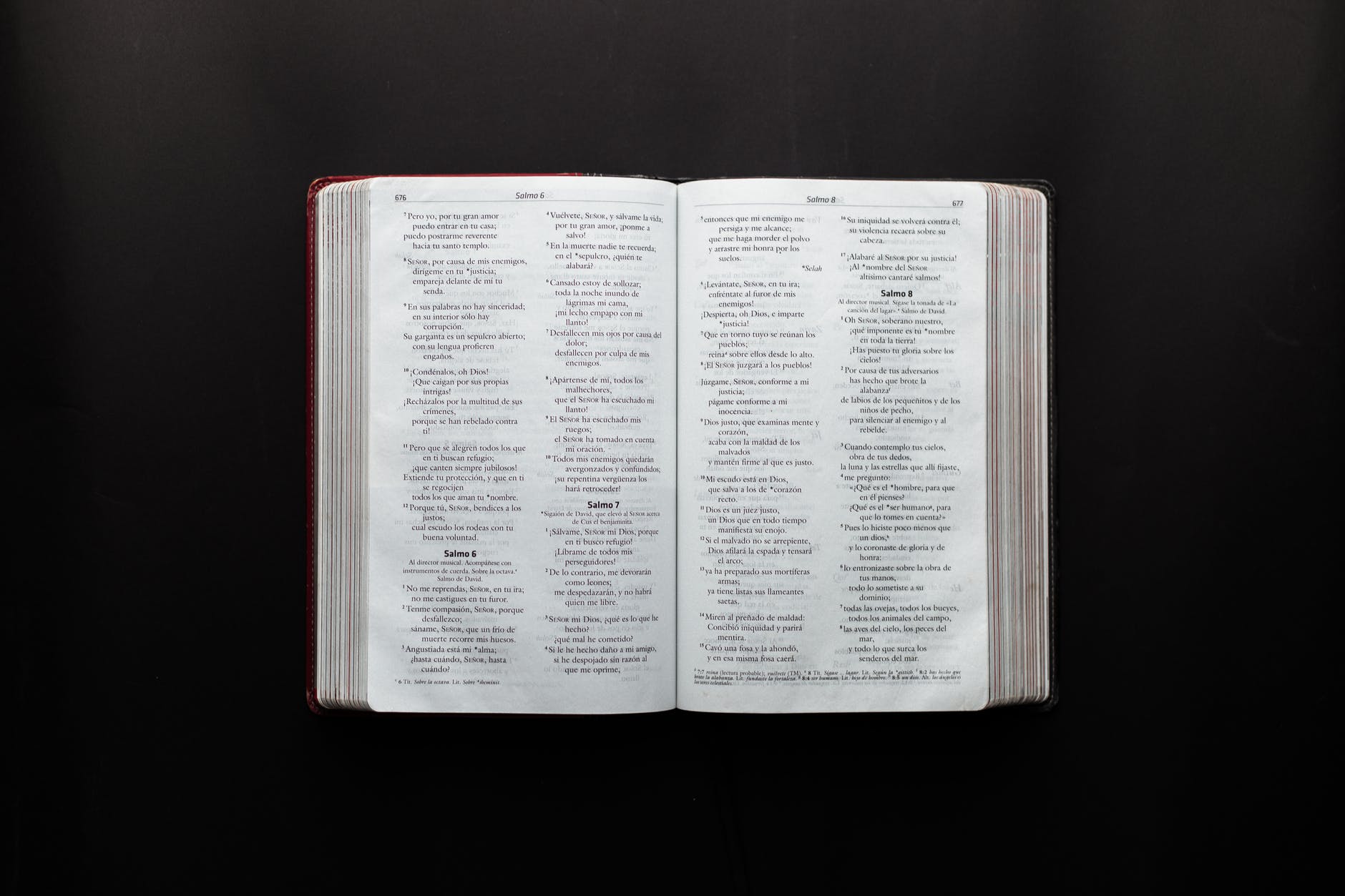
There are some believers who think all these words we’re discussing should not be used if they don’t appear in the KJV or ESV. I think that view is limiting. It’s also hypocritical if they use any words not found in the Bible. Can’t have it both ways. Language changes, but God’s truth does not. Language is different across culture, but God’s truth is not. We shouldn’t get hung up on where the words we use come from, from scripture or culture, but we should get hung up on what words mean and whether or not our use of them promotes and aligns with good theology & sound doctrine. If Jesus showed concern for every dot and iota in God’s Word (Matthew 5:18) then we ought to show concern for the words we use in communicating God’s Word.
Discover more from Seeds & Streams
Subscribe to get the latest posts sent to your email.
