There have been many versions of this old 1966 Ramsey Lewis jazz song, Wade in the Water, I remember learning a cover version on guitar to play for a school scripture class while a friend of mine sang the soulful words, wade in the water, children, God’s gonna trouble the water…
The lyrics play on both God leading Israel through the parting of the Red Sea, and also the image of the angel that, supposedly, would stir or trouble the water at the pool of Bethesda in the gospels.
It’s this imagery of God’s power to heal, deliver and set free that is so often connected to water. Be it saving Noah while cleansing the earth with water, delivering Israel from slavery in Egypt by parting the waters of the Red Sea, Moses striking the Rock in the wilderness so water would flow out for the people and animals, Joshua leading Israel into the promised land as God caused the Jordan River to stop flowing, John’s baptism, or the pronouncement of living water flowing out of our bellies as you receive the Holy Spirit. The image of water is used powerfully throughout the scriptures.
Ezekiel’s River

In Ezekiel 47 the prophet has a vision of a river, often referred to as Ezekiel’s river but in reality, he’s an observer, not the owner, of this river. This is the River of God flowing from the temple.
We’ll look closer at this further down, but for now it’s sufficient to point out that from verse 1-11 an angel walks Ezekiel through the water of the river, first ankle deep, then knee deep, then waist deep and then he comes to water deep enough to swim. Ezekiel cannot go any further and the angel leads him back to the river bank where he observes trees growing. Ezekiel’s vision continues and he then is shown how the river flows into the Dead Sea and makes everything burst with life.
It’s important to keep in mind, however, that by the time Ezekiel sees this river in chapter 47, he’s already 8 chapters deep in a vision from Heaven.
You read that right; Eight…. chapters.
In Ezekiel chapter 40, the Lord takes Ezekiel into a vision, and a heavenly messenger looking like bronze begins to take Ezekiel on a tour of the temple. The observation of the ‘River’, which is actually a small part within a very long vision, comes in chapter 47.
Interestingly, and sadly, too many people focus only on the river, and not the context of the rest of the vision. But the river is within the vision, not separate from it.
In the vision that starts in chapter 40, the temple is highly detailed, perfect in every way, and it should be noted, was never built. The rebuilding of the temple after the Exile doesn’t fit Ezekiel’s description, nor does Herod’s temple, which was the one present during the days of Jesus’ ministry, and destroyed during the sacking of Jerusalem in A.D. 70.
None of the temples built ever looked exactly like the one described in Ezekiel’s vision. This leads some to believe it will be built eventually, prior to Jesus’ return, a ‘final’ temple.
While many devout Jews, and many Christians, subscribe to this perspective, many do not. The reason many Christians are not waiting for a third and ‘final temple’ is that Christians are described in the New Testament as being the temple of God; the temple of the Holy Spirit (1 Cor 3:16, 6:19; 2 Cor 6:16; Eph 2:22; 1 Pe 2:5); in this view, we are the final temple God is building, and Jesus is the cornerstone, rejected by men but chosen by God (1 Pe 2:4).
When we consider the purpose of the temple, a meeting place, a place to house the presence of God, a place to offer sacrifices and make atonement, etc… why would God need another localised and centralised temple on earth when the Gospel is meant to go to the ends of the earth?
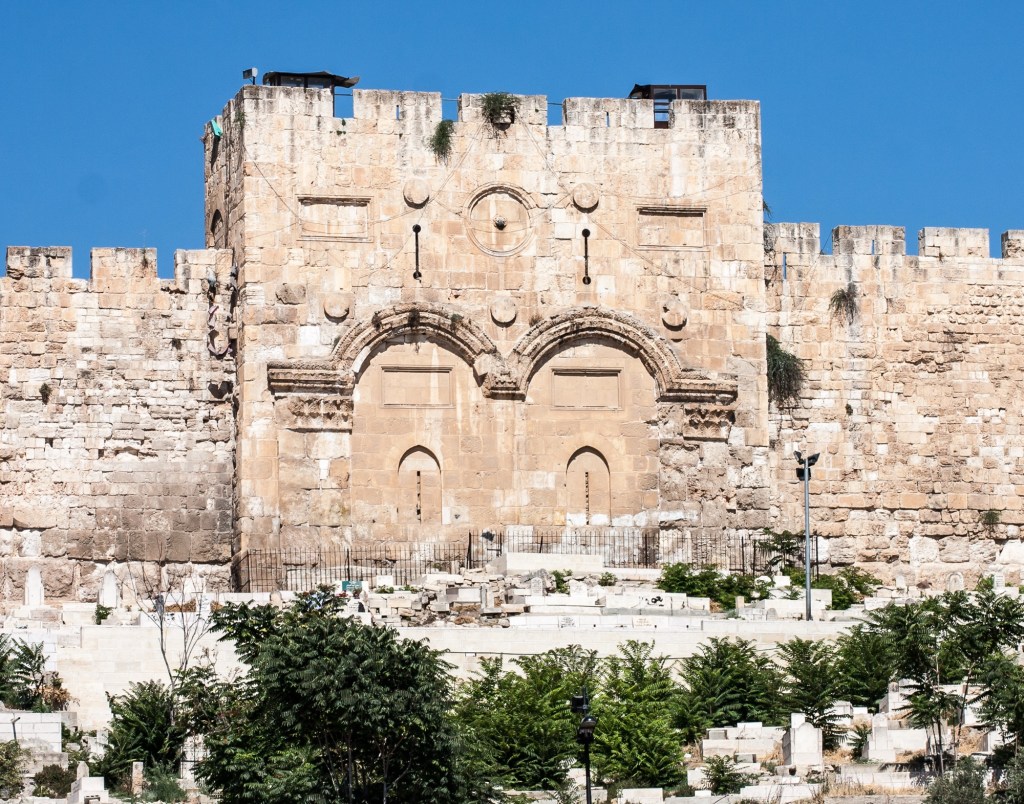
Others push back, suggesting the temple needs to be rebuilt so Jesus can return to the East gate. Where do they get this idea from? Ezekiel’s vision of course!
Ezekiel 44:1-3 // “Then he brought me back to the outer gate of the sanctuary, which faces east. And it was shut. And the Lord said to me, “This gate shall remain shut; it shall not be opened, and no one shall enter by it, for the Lord, the God of Israel, has entered by it. Therefore it shall remain shut. Only the prince may sit in it to eat bread before the Lord. He shall enter by way of the vestibule of the gate, and shall go out by the same way.””
It certainly is interesting that the only Temple Gate that remains standing is the east gate (Golden Gate) and that it was sealed shut in 1541. It still remains to this day.
God without walls… or curtains
God tore the veil when Jesus died (Mat 27:51) and in that moment the sacrificial system was ‘finished’, or complete, just as Jesus declared on the cross.
What’s more, God allowed the Romans to destroy the temple 40 years later in A.D. 70, and announced to the church through the Holy Spirit-inspired scriptures that they were now the temple of God.
In Hebrews we’re told that Jesus, our eternal high priest, sat down in heaven for his work has been completed and there is no more need to offer again the blood of bulls and rams… There would seem to be no need for another physical temple (unless you’re a Jew that denies Christ and is still ‘waiting’ for the Messiah, then yeah, you need a third physical temple).
Will the temple be rebuilt? Maybe. Do we need it to be rebuilt? I’m not convinced that we do.
So if this temple was never to be built and used, what and why is Ezekiel’s vision?
Like many prophecies, there’s likely a dual application.
Firstly, to Israel at the time, this temple was the ideal temple and sacrificial system Israel was to aspire to, as they looked for the coming of the Messiah.
For the Church, we see the sacrificial system, the temple, the animals and the law as being fulfilled in Christ. The temple is an image, better yet, a shadow, of the new Jerusalem where the presence of God will dwell forever.
Colossians 2:17: “These are a shadow of the things to come, but the body that casts it belongs to Christ.”
Hebrews 8:5: “These ministers serve a copy and shadow of the heavenly things”
Hebrews 10:1: “For the law is only a shadow of the good things that are coming, not the good things themselves”
The Old Testament showed us the shadow, Christ showed us what casts the shadow; he does. He is the substance we long for.
Ezekiel predicts the move from an altar to a table
Just as the veil was torn and we were invited into the Presence of God, so too are we invited to the Table of the Lord.
In Ez 41:21-22 the prophet describes an ‘altar of wood’ with specific dimensions. This is interesting because it’s not said to be overlaid with bronze, which means it could not be used as an altar. If you tried to burn your offering, the whole altar would burn with it since it’s made from wood. In the same verse, however, the angelic messenger tells Ezekiel that this altar is “The table that is before the Lord”.
This seems to point to the messianic shift that will happen, when instead of worshippers bringing their sacrifices to the Lord at the altar, we will instead come and receive Christ’s sacrifice at the table.
Instead of our relationship with God being dependent on what we bring, it will be based on what is given; namely, Christ.
In Malachi chapter 1, God is rebuking the priests of Israel for allowing lame and sick animals on the altar, which he first calls an altar, then changes and calls it the ‘table of the Lord’; “…How have we despised your name? By offering polluted food upon my altar. But you say, ‘How have we polluted you?’ By saying that the Lord’s table may be despised.”
Malachi 1:6b-7 ESV
Then when we arrive in the New Testament, the fulfilment has come. Christ shares his body and blood in the upper room on the night of his betrayal, and when writing to the Corinthians, Paul clearly speaks of the Lord’s supper, the bread and the wine, as being the ‘Table of the Lord’ (1 Cor 10:21).
Ezekiel’s vision is about the Gospel and about the fulfilment of God’s redemptive plan for humanity, and all creation.
What about the river?
We see the River of God flowing into the Dead Sea (the world) and bringing life everywhere it goes; all things are being made new.
You can dive into numerous commentaries that discuss these perspectives in greater detail than this article aims to do, for now, consider the words of Zechariah as he speaks about the Kingdom Come, the great eternal day of the LORD:
Zechariah 13:1 – “On that day there shall be a fountain opened for the house of David and the inhabitants of Jerusalem, to cleanse them from sin and uncleanness.”
Zechariah 14:8-9 “On that day living waters shall flow out from Jerusalem, half of them to the eastern sea and half of them to the western sea. It shall continue in summer as in winter. And the Lord will be king over all the earth. On that day the Lord will be one and his name one.”
Then there’s the prophet Joel:
Joel 3:18 – “And in that day the mountains shall drip sweet wine, and the hills shall flow with milk, and all the streambeds of Judah shall flow with water; and a fountain shall come forth from the house of the Lord and water the Valley of Shittim.”
The vision of Ezekiel chapters 40 to 48 are almost certainly to do with future fulfilment in the culmination of all things; the second coming of Jesus, the renewal of heaven and earth, new Jerusalem, resurrection and eternal life free from the bondage of sin, death and decay! And a regular feature in prophetic writing about this soon coming reality is a River or Fountain of Life.
Catch the last part of Ezekiel’s description of the River in 47:12
“And on the banks, on both sides of the river, there will grow all kinds of trees for food. Their leaves will not wither, nor their fruit fail, but they will bear fresh fruit every month, because the water for them flows from the sanctuary. Their fruit will be for food, and their leaves for healing.”
Sounds amazing, right!? And now compare that with the Apostle John’s words from his Revelation at the end of the New Testament:
Revelation 22:1-2 – Then the angel showed me the river of the water of life, bright as crystal, flowing from the throne of God and of the Lamb through the middle of the street of the city; also, on either side of the river, the tree of life with its twelve kinds of fruit, yielding its fruit each month. The leaves of the tree were for the healing of the nations.”
Did you notice it?
Both John and Ezekiel speak of the River flowing from the Temple, and both speak of trees on both sides of the river producing fruit every month, while the leaves bring healing to the nations.
Some commentators naturally assume (and it is an assumption) that the angel that gave Ezekiel the tour in his vision is the same one speaking to John. Whether it is or isn’t doesn’t matter, both messengers speak of the same future hope and glory; the River of Life and the Tree of Life.
Wade in the water, Ezekiel, God’s going to stir up the water!
So, let’s dive in to the passage where Ezekiel is led through deeper sections of this life-giving river.
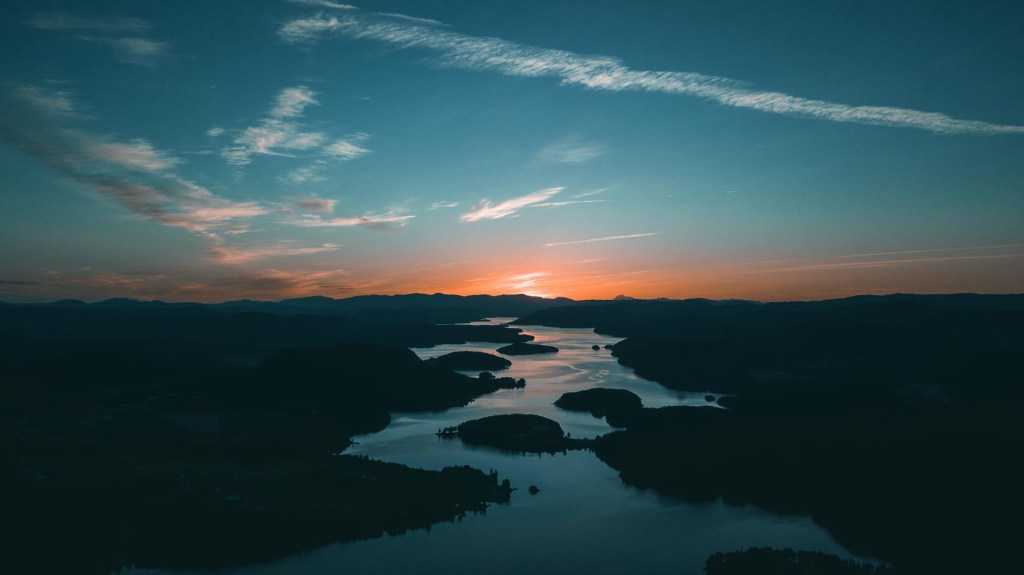
“Then he brought me back to the door of the temple, and behold, water was issuing from below the threshold of the temple toward the east (for the temple faced east). The water was flowing down from below the south end of the threshold of the temple, south of the altar. Then he brought me out by way of the north gate and led me around on the outside to the outer gate that faces toward the east; and behold, the water was trickling out on the south side. Going on eastward with a measuring line in his hand, the man measured a thousand cubits, and then led me through the water, and it was ankle-deep. Again he measured a thousand, and led me through the water, and it was knee-deep. Again he measured a thousand, and led me through the water, and it was waist-deep. Again he measured a thousand, and it was a river that I could not pass through, for the water had risen. It was deep enough to swim in, a river that could not be passed through. And he said to me, “Son of man, have you seen this?” Then he led me back to the bank of the river. As I went back, I saw on the bank of the river very many trees on the one side and on the other.”
Ezekiel 47:1-7 ESV
The river is wide and eventually it is deep; deep enough to swim.
A cubit is about 45cm (or 18 inches). So 1000 cubits is approximately 450m (about 492 yards). The angel measures 450m and then led Ezekiel through the water.
He did this several times.
Measure, lead, measure, lead…
The first 450m is ankle deep, the second 450m is knee deep, the third 450m is waist deep, and finally he measures another 450m and it’s deep enough to swim. Notice however the angel does not lead him into this deep water but instead Ezekiel simply says “I could not pass through, for the water had risen”.
Ezekiel does not swim.
The Angel leads him, wading through 1250m of water, until the final 450m is measured out but Ezekiel is unable to go any further as it is too deep for him to pass through. It would seem that the water was deep enough to swim, but swimming wasn’t on the agenda. The angel then leads him back to the river bank.
Israel and Water

Israel has an interesting relationship with water.
During the flood, the whole world was washed away, except for Noah and his family, and ever since then there has been a strong connection between water and death.
This connection to death is why baptism is such a powerful symbol.
We enter into the death and burial of Christ by entering the water, and confess our confidence in being raised with him as we are raised back up out of the water.
Throughout the psalms and prophetic writings the sea is often used as an image of turmoil, lost people, death and the grave.
Jesus calming the storm was far more significant when we understand this. To the disciples, Jesus was not just greater than the sea, but greater than death! Terrified, the disciples asked each other, “who is this!?”
It makes sense to ask that question, doesn’t it?
Is it any wonder that when Peter walked on water, he freaked out when he began to sink?
Is it possible that he didn’t know how to swim properly, and was worried he was being pulled down into the depths?
It’s hard to say, but it’s certainly plausible.
Peter didn’t start treading water and say, ‘wow, that was amazing! I took a few steps! Wasn’t that cool!’ No, he cried out in terror – ‘I’m sinking!!’
Swimming was not a thing done by many ancient peoples. Even today, swimming is not a huge pastime for a lot of adults, especially not in deep chaotic waters. Just watch a few episodes of Bondi rescue!
When Ezekiel came to the point where the river was deep enough to swim, he didn’t swim. He waded in the water, ankle, knee, then waist deep, then returned to the bank.
This flies in the face of those who would turn this passage into an allegory for ‘swimming’ in the river of God.
Ezekiel didn’t swim.
Nor was he asked to; the point was to see, not to swim.
Consider the words the angel spoke immediately after Ezekiel noted the water was deep enough to swim in:
‘Then he said to me, “Son of man, have you seen this? Then he led me back to the bank of the river” (47:6)
Ezekiel was meant to see the river, he was meant to observe it getting increasingly deeper with each measurement, and understand something that God wanted him to know. We can only speculate as to exactly what that ‘thing’ is, as this vision did not come with an interpretation in scripture.
Dive in! Swim in the River! …Really?

Many well-intentioned preachers and pastors have read this scripture about the river that gets deeper, and turned it into an invitation to dive in! Swim in God’s river! And while the idea of ‘going deeper’ and getting ‘swept up’ in God’s presence are lovely and beautiful, and certainly desirable, this passage in Ezekiel is not pushing that cart and here’s why;
The shallow part of the river is still part of the river.
Any time I have heard a preacher, or read a book or article about this passage, where the emphasis is on ‘going deeper’ in your relationship with God, the shallow, ankle and knee deep water, is almost always demonised as the place for immature believers who aren’t “serious” about their faith or their relationship with Jesus.
‘Stop paddling in the shallows and swim in the deep’ we’re told.
The problem is, in the vision Ezekiel has there is no distinction between the quality of the water based on its depth.
The ankle deep water is still part of the river flowing from the very temple and presence of God! Nothing to scoff at.
What’s more, it is the ankle deep water that is touching the river bank where the tree of life is producing monthly fruit and leaves of healing!
The analogy of deeper-is-better just doesn’t hold up to the purpose of this vision, partly because it’s not in the text, and also because logic requires a different interpretation.
If you have children, you don’t throw them in the deep water (unless you’re a Navy SEAL training your kids to be like Dave Goggins), no, you let them frolic and play, splash and jump around in the shallow water.
Even those who do like to swim in deep water, you can’t stay there for long, eventually you need to return to where you can stand up so you don’t drown.
I love spearfishing and freediving, sometimes we jump out of the boat and you can’t see the bottom despite crystal clear water as it’s over 100m deep! But we don’t stay there, eventually we get back in the boat.
Ezekiel went wading, and the angel never made it a moral issue or spoke of it as a demonstration of Ezekiel’s maturity, or lack thereof.
If anything, one might argue that going deeper is more closely aligned with dying to self with greater, or deeper, levels of humility and sacrificial love, but that is only when the water is a symbol of death.
Here, it’s the river of Life, not death.
Further down in Ezekiel 47, the angelic messenger is describing the impact that the river has as it flows into the Dead Sea. The text just mentions the ‘sea’ but based on its location and description, all commentators agree it’s likely referring to the Dead Sea, which makes sense; the Life-Giving River of heaven is going to make dead places come alive! However, in verse 11 the angel points out that certain parts of the Dead Sea will not receive the river water; the swamps and marshes will remain dead.
“And wherever the river goes, every living creature that swarms will live, and there will be very many fish. For this water goes there, that the waters of the sea may become fresh; so everything will live where the river goes… But its swamps and marshes will not become fresh; they are to be left for salt.”
Ezekiel 47:9, 11 ESV
The fact that the swamps and marshes are left for salt is not in any way a comment on the quality of the river or its power. Everywhere the river does go… life follows.
The marshes and muddy swamps stay as they are because the river water does not reach them or flow into them. Much like the seed that falls on the path, the birds snatch them away and they bear no fruit. So too the marshlands, by refusing the river they shall remain lifeless.
It would be a gross misinterpretation to equate the shallow parts of the river as being synonymous with these swamps and marshes.
Sadly, there are some who suggest that those who prefer to paddle in the ankle deep water as being those who prefer to sit in the boggy marsh and croak like frogs. Such preaching condemns those who don’t ‘swim’ by comparing them to swamp creatures that live in the shallows.
It’s borderline blasphemy, calling the River of God a swamp when the text clearly says that the swamps and marshes are parts of the Dead Sea that the River of Life will not flow into. This is what happens when we refuse to preach the whole text and ignore its wider context.
The real danger of talking down about the shallows as being places you don’t want to be, is that you can begin to create an us-and-them mentality of who is in and who is out.
Who is mature, and who is not.
Who is serious about Jesus, and who is not.
Who is superior, and who is inferior.
This is the game the Pharisees played; real Christians would be in the deep part of the river, yet it’s those who ‘swim’ who will unknowingly (yet inevitably) drown in their own self-righteousness and pride.
This line of thinking, that ‘real’ Christians swim in the deep, makes no allowance for the weak and immature who will inevitably be among us if we are a healthy, growing, community of Jesus followers.
Every time a person ‘gets saved’, they are born again and start their journey of faith. This person is immature and has a lifetime of growing to do, just as I do, just as you do.
To suggest all must ‘swim in the deep’ and dive in is incoherent; you cannot dive in to the deep part of this river without first wading through 3 quarters of it!
If the analogy of spiritual-maturity representing river-depth is to be used, at least don’t change the qualities of the river! There is actually no place to dive in from without first wading through 1.35km of ankle, knee and then waist deep water. The deep water is not next to the diving blocks!
Personally, I don’t mind the metaphor of the spiritual life being like a journey into the deep, as long as it is a journey and as long as every person in the river is celebrated for being in the river, regardless of depth! Anyhow, only God knows where each person is located in terms of growth and maturity, and who are we to judge the servants of God?
Rivers and sowers
Come across to the parable of the sower for a moment: In Jesus’ parable we’re told that the seed that fell on good soil reaped 30, some 60, and some 100 fold. The achievement-driven western church has foolishly placed a moral value on these outcomes, often telling their congregation to aim for 100-fold as if somehow we are solely responsible for our own spiritual formation and fruitfulness.
Last time I checked, God is the potter and we are the clay; he is the one forming us as we submit to his hands.
Here’s the often overlooked point: The seed that returned a 30 fold harvest was still sown in good soil.
It was still good!
The parable of the sower is all about soil quality; heart quality. Whether 30, 60 or 100 fold return, each harvest is said to have come from ‘good soil’.
The usual yields for seed to produce grain is 1:3 – So any farmer would be ecstatic over 30 fold!
Let’s not look down our noses at the 30 fold, for both the seed and the soil that produced it is what Jesus calls ‘good’. Yes, let’s desire and aim for 100, let’s be full of passion to run our race and fulfil all that God has planned for us, resisting the world, the weeds and the thorns and cultivating hearts that are yielded to his grace.
But let’s not assign a moral measurement to the harvest quantity. We shouldn’t do it to the seed or the harvest, nor to the depth of the water that a believer is wading in. It is the Lord who forms us, gives the increase, and leads us by his mercy and grace. One plants, another water, but the increase comes from the Lord.
I digress.
All of this is ultimately beside the point; because nowhere in Ezekiel’s vision is it suggested that the differing depths of water correlate to different levels of spiritual maturity.
It’s simply not… in…. the… text.
I searched multiple commentaries and none of them even hint at this as a potential interpretation, here are what some had to say about the increasing depth of the river:
In A Commentary, Critical, Experimental, and Practical, on the Old and New Testaments, Vol. IV: “Searching into the things of God, we find some easy to understand, as the water up to the ankles; others more difficult, which require a deeper search, as the waters up to the knees or loins; others beyond our reach, of which we can only adore the depth”.
In The Asbury Bible Commentary: “This symbolic stream not only watered the desert, but it flowed into the sea and sweetened it, producing great schools of fish. On its banks grew all kinds of fruit trees and trees with healing leaves. Thus Ezekiel envisioned how the return of Yahweh to the new temple would bless the whole world and its peoples”.
In Matthew Henry’s Commentary: “Most interpreters agree that these waters signify the gospel of Christ, which went forth from Jerusalem, and spread itself into the countries about, and the gifts and powers of the Holy Ghost which accompanied it, and by virtue of which it spread far and produced strange and blessed effects. Ezekiel had walked round the house again and again, and yet did not till now take notice of those waters; for God makes known his mind and will to his people, not all at once, but by degrees… If we search into the things of God, we shall find some things very plain and easy to be understood, as the waters that were but to the ankles, others more difficult, and which require a deeper search, as the water to the knees or the loins, and some quite beyond our reach, which we cannot penetrate into, or account for, but, despairing to find the bottom, must, as St. Paul, sit down at the brink, and adore the depth”.
A number of commentators, in reference to the increasing depth of the river and Ezekiel’s inability to go any further, echo Paul’s reflection on the deep things of God in Romans 11:33;
“Oh, the depth of the riches and wisdom and knowledge of God! How unsearchable are his judgments and how inscrutable his ways!”
If I stumbled upon the River of Life flowing out of Heaven I would be ecstatic to be allowed to dip my toes in, over the moon to be allowed to paddle or wade into God’s River! Let us desire the depths without denying the wonder of the shallows.
This is a great example of simply allowing scripture to speak for itself without trying to add or extract special meanings that just aren’t there.
It’s also a great example of why expository Bible study and preaching can help avoid the pitfalls that come when we divorce scripture from its context. If you read/study/teach the whole text, you would never arrive at this depth = maturity idea. It’s just not there.
If you have ever been made to feel unspiritual or immature as a believer because you’re not ‘swimming’ in the deep, rest assured, Ezekiel didn’t swim either. He was there to see, not swim.
Ezekiel was invited to see a glorious vision of the temple; he saw the river, the Dead Sea coming alive, and he saw some swampy places fail to receive the river. The quality of the river is never questioned, the impact of the river is absolute and the depth of the river is not given moral value.
Matthew Henry’s commentary seems to be the most spiritually common sense interpretation; The River of God is as the Gospel of Jesus, flowing out from heaven to impact the world and bring life everywhere it goes, starting as a trickle, then getting deeper and wider as it spreads to the uttermost parts of the earth until eventually Christ returns.
The River is the grace and mercy of God’s heart flowing to the nations and the invitation remains, Come, come and wade in the water, come and observe the depth of the riches and wisdom and knowledge of God!
“And he said to me, “Son of man, have you seen this?” Then he led me back to the bank of the river.”
Ezekiel 47:6 ESV
Discover more from Seeds & Streams
Subscribe to get the latest posts sent to your email.
