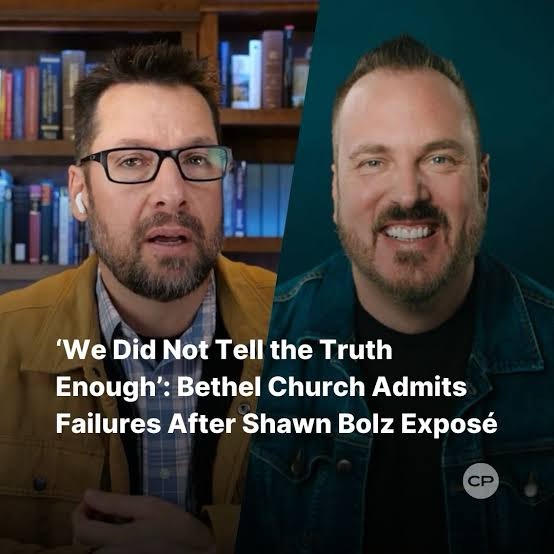
Shawn Bolz is a fraud; he has been exposed, with copious amounts of evidence, to be a fake prophet (data mining Facebook and claiming God gave him secret knowledge), and to have behaved in sexually inappropriate ways around his staff members. So, naturally, there is a lot of talk in the Charismatic world right now about the accountability structures that have been lacking and the subsequent cover-up of significant moral failure and fraud. There’s a shakedown going on and God is doing the shaking.
1 Peter 4:17 reminds us that Judgement begins in the house of God and 1 Timothy 5:20 instructs church leaders to publicly expose and rebuke Leaders/Pastors who fall, and fail to repent, so that all may fear the holiness of God.
This is what is happening.
And, this is good. It is proper, and it is right.
It also isn’t new. Leaders have failed, been corrected and endured public scandals throughout much of Church History. Examples of high profile pastors caught up in accountability dramas (for a range of reasons) in the last 2 decades include Brian Houston, Mark Driscoll, Bill Hybels, Ravi Zacharias, Mike Bickle, Tullian Tchividjian, James MacDonald, Perry Noble, Carl Lentz, Ted Haggard, and Robert Morris, to name a few. Some repented, did the work, got restored and returned to ministry, others have not, and some should not (return to ministry).
While it is true that there are tares among the wheat, and wolves in sheep’s clothing, there are also good leaders who mean well, who often start great and do amazing things for God, but get lost along the way because the guardrails were removed and like David with Bathsheba, they start to feel like they can do whatever they want.
Leaders need the safety that comes from accountability, just as much as congregations do.

Structures of accountability
Failures and abuses happen when Leaders do not perform their responsibilities as required. Either they do what ought not be done, or, they do not do what ought to be done. In either case, the question that needs to be considered for the safety of the congregation (and the Leader) is; are there structures or systems in place that can assess and measure whether or not the responsibilities of the Leader are being carried out dutifully, or are they being neglected… or worse, abused? And if you’re not even aloud to ask, that’s a massive red flag.
True responsibility only exists when there is authentic accountability.
If a person cannot be held accountable for their actions, neither can they be made responsible for their actions. It’s two sides of the same coin. The parable of the talents is the giving of responsibility, followed up with the inspection of accountability; God requires us to embrace both.
If I do not enrol my children in a school, the government can send people to my house to find out why. If I continue to fail to meet my legal responsibility to put my kids in school, I can be deemed a neglectful parent and have my children taken away from me. The government can hold me accountable because there is a system and structure in place to do so. This is generally how the Law is supposed to function. Citizens are responsible for obeying the law, the Police are able to bring you to account if you break the law. Actions, consequences; responsibility, accountability.
On the other hand, Dictators cannot be held accountable. In such nations (or organisations) the Dictator can neglect their citizens, even abuse their citizens and there is no legitimate accountability structure in place to stop them.
This is what happens in churches when the Leaders do not have functioning systems in place to hold them accountable for that which they are responsible for; Feeding, nurturing, and protecting the sheep.
Leaders in the Church are never truly responsible for something unless they can be held accountable. When accountability is lacking, responsibility becomes optional, and compromise becomes an all too easy temptation; every, single, time.
But God is always watching, patiently, looking for repentance when leaders wander off the path. But he does not watch and wait forever, just as he spoke through the prophets, accountability is always forthcoming;
“Thus says the Lord God, Behold, I am against the shepherds, and I will require my sheep at their hand and put a stop to their feeding the sheep. No longer shall the shepherds feed themselves. I will rescue my sheep from their mouths, that they may not be food for them” (Ezekiel34:10 ESV)
“My anger is hot against the shepherds, and I will punish the leaders; for the Lord of hosts cares for his flock, the house of Judah, and will make them like his majestic steed in battle” (Zechariah 10:3 ESV)
God will hold the shepherds and leaders in his church accountable, and while it would be better for them (and everyone else) if accountability structures were built in as safety nets for protection, there also comes a time when God will step in, expose and correct in dramatic and public ways. Why? Because He is the Good Shepherd who loves the sheep of his pasture.
Cover Up Culture
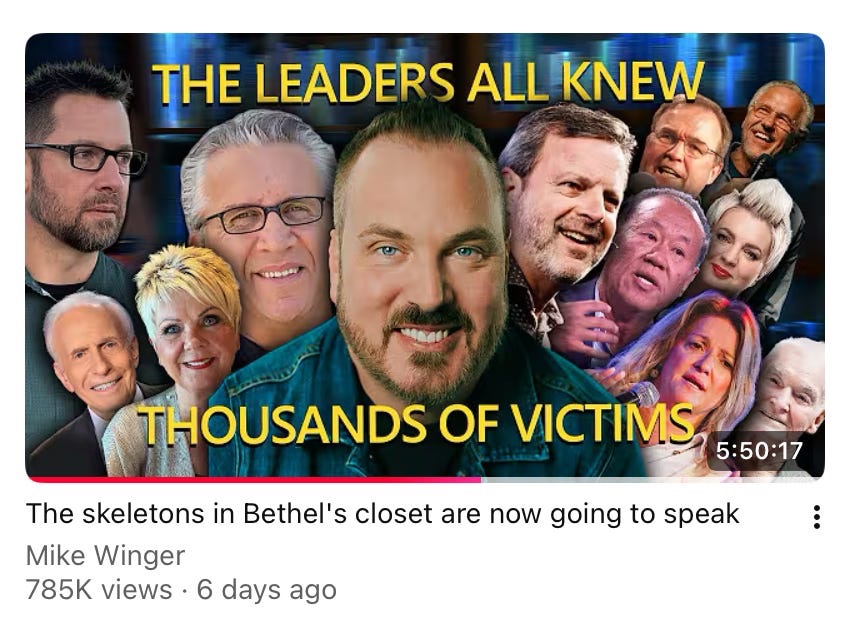
Mike Winger (Biblethinker.org) has rightly called this lack of accountability within the Charismatic church, a culture of cover-up. There seems to be a trend and a pattern of leadership behaviours, where instead of following Biblical principles of accountability, addressing failures and exposing abusive or sinful leaders, such things are being overlooked, hidden and kept secret. Instead of church discipline, there is a trend of cover-up.
The whole point of 1 Timothy 5:20 is so that the Leaders and Pastors of the church would have a healthy fear of public rebuke and shame. It’s good for us to be afraid of getting caught, this can help us to bring our flesh and old nature under control, so that we make good choices. As soon as the possibility of being caught or exposed is removed, wisdom and the fear of God often go with it.
Case in point: King David thought he could do anything he wanted, he thought he was above the law and above accountability. He took Bathsheba, the wife of one of his loyal men, and had an affair with her, resulting in pregnancy. Then he arranged her husband’s death to try to cover it up!
Cover-up culture is always one more lie, attempting to try to hide the previous lie. It is the intentional effort to turn a blind eye and keep in the dark what ought to be brought into the light.
But wait! I can hear some say. Doesn’t the Bible say that ‘love covers a multitude of sins’? Yes, and it’s in the very same chapter of 1 Peter where we are told Judgement begins in the house of God. Yes, love does cover a multitude of sins, but that same love also confronts and exposes sin when that sin hurts people, especially if it is church leadership inflicting the damage. Need an example?
See how Paul handled the Apostle Peter’s hypocrisy, and note how Peter’s failure was influencing and hurting other believers.
“But when Cephas (Peter) came to Antioch, I opposed him to his face, because he stood condemned. For before certain men came from James, he was eating with the Gentiles; but when they came he drew back and separated himself, fearing the circumcision party. And the rest of the Jews acted hypocritically along with him, so that even Barnabas was led astray by their hypocrisy. But when I saw that their conduct was not in step with the truth of the gospel, I said to Cephas before them all, “If you, though a Jew, live like a Gentile and not like a Jew, how can you force the Gentiles to live like Jews?”
Galatians 2:11-14 ESV (emphasis added).
Peter’s behaviour was out of step with the Gospel and was leading others into error. Paul not only opposed Peter to his face, but did so ‘before them all’; he did it publicly because Peter had a high and public profile in the church. THEN the Holy Spirit guides Paul to write it down in the letter to the Galatians and preserved it as Scripture for us all to see and know of Peter’s failure and his public rebuke. That’s exposure!
This is literally a textbook example of how to hold leaders accountable when they overlook or neglect their responsibilities to the church.
If a Church Leader/Pastor cannot be held accountable for his responsibilities, then it means he does not have to give an account for what has been entrusted to him. He is in dangerous and unbiblical territory as a leader.

‘Touching the Lord’s anointed’ isn’t what they say
When attempting to bring accountability is framed as ‘touching the Lord’s anointed’, you’re no longer in a church, you’re in the early stages of a personality cult. David chose not to kill Saul for he would not ‘touch the Lord’s anointed’, but he still cut off a corner of his robe, then confronted him publicly to expose him.
“…some told me [David] to kill you [Saul], but I spared you. I said, ‘I will not put out my hand against my lord, for he is the Lord’s anointed.’ See, my father, see the corner of your robe in my hand. For by the fact that I cut off the corner of your robe and did not kill you, you may know and see that there is no wrong or treason in my hands. I have not sinned against you, though you hunt my life to take it (1 Samuel 24:10-11).
Not touching the Lord’s anointed meant not killing him! But you can be sure all of Saul’s men were outside the cave and they all heard and saw David exposing the King while claiming his own innocence. Touching the Lord’s anointed is not the same as bringing reasonable critique or raising legitimate concerns. When “don’t touch the Lord’s anointed” is used to shut down accountability, then the leadership is ironically behaving more like Saul and less like David.
Peter was also the Lord’s anointed. He was set apart by Jesus, after the resurrection, to lead the Church, to feed the sheep and nurture the lambs (See the end of John’s Gospel). Yet even Peter was not beyond being held publicly accountable. And what did Peter, years later, have to say about Paul who rebuked him so publicly?
“And count the patience of our Lord as salvation, just as our beloved brother Paul also wrote to you according to the wisdom given him, as he does in all his letters when he speaks in them of these matters. There are some things in them that are hard to understand, which the ignorant and unstable twist to their own destruction, as they do the other Scriptures.”
2 Peter 3:15-16 ESV
Peter calls Paul a beloved brother, acknowledges the wisdom God has given him, and goes as far as to call Paul’s writings ‘scripture’ by acknowledging some people struggle with Paul’s writing as they do other scriptures.

Don’t shoot the messenger
Too often what has happened in the church (especially the Pentecostal and charismatic church) is that when a criticism, or observation, is made that confronts the status quo and calls into question the doctrines, behaviours or practices of the church, and therefore it’s ‘Leader’ (by default), the messenger is shot and the message disregarded.
What ever happened to ‘don’t shoot the messenger’?
What we ought to do is love the messenger, and wrestle with the message, and find out if there are ‘two or three witnesses’ carrying the same message.
Wrestling with the message is what David had to do when Nathan confronted him about Bathsheba.
It’s what Peter had to do when Paul confronted him to his face.
It’s what all Leaders ought to do when a difficult message of rebuke or correction is delivered to them; thank the messenger for loving you enough to ‘be that guy’, then wrestle objectively with the report.
Peter and David both experienced what the writer of Proverbs said;
“Better is open rebuke than hidden love. Faithful are the wounds of a friend; profuse are the kisses of an enemy.”
Proverbs 27:5-6 ESV
The truth is, no one likes being wounded, we would rather have people always agree with us and tell we are wonderful. But that’s not love, and those aren’t real friends. Surrounding yourself with ‘yes-men’ who just agree with you and never challenge you is a sure way to become the kind of leader who Jesus rebukes in the book of Revelation.
““‘I know your works, your love and faith and service and patient endurance, and that your latter works exceed the first. But I have this against you, that you tolerate that woman Jezebel, who calls herself a prophetess and is teaching and seducing my servants to practice sexual immorality and to eat food sacrificed to idols.”
Revelation 2:19-20 ESV
The Leaders of the church in Thyatira did not confront or rebuke a minister in their midst the way Paul rebuked Peter. Instead, they simply tolerated this minister’s bad behavior. Was this ‘Jezebel’ an actual woman, or is Jesus addressing a spirit? We don’t know for sure, but we do know that the Leaders failed to hold ‘her’ accountable and Jesus is now holding them accountable for not doing it soon enough! What Jesus models, we should follow.
Good leaders need to have ‘Pauls’ and ‘Nathans’ around them, they need to build friendships with co-leaders who have permission and authority to inspect whether or not the Leader is carrying out their responsibilities according to scripture. People who will wound them with confrontation in order to love them faithfully and authentically.
For several years messengers came forward with reports about Shawn Bolz, but instead of wrestling with the message and loving the messenger, the messenger was shot and message buried (figuratively); it was covered up, no one was rebuked publicly and the church was not warned about this Bolz.
The leaders at Bethel (and elsewhere) failed to expose and rebuke Bolz publicly, and in doing so they kept an abusive fraud in ministry. They didn’t just fail each other, they failed their congregations and they failed God. Thankfully, exposure and rebuke is happening now, and a pathway for true repentance is being made available. It’s too early to comment on what happens next in that regard; time will tell how authentic the repentance is.
Thank God for the Warning
The Bolz situation should be a warning to all church Leaders and Pastors, especially in Pentecostal/Charismatic churches. Public rebuke is public precisely for this reason! “As Paul wrote, do it publicly so that all may fear. Accountability structures matter.
But why don’t these structures already exist if scripture is so clear about it? Here’s a few reasons why some churches may be lacking proper accountability:
- Accountability kills Momentum: Leaders like to get things done, and accountability structures can slow down momentum and progress; accountability structures can be seen as red tape and resisted instead of being seen as a biblical safety net to be grateful for.
- Accountability limits power: Some leaders like the sensation of power, of being the top-dog and not having to run their ideas or decisions through a committee. Like the sons-of-thunder, they want to call down fire on anyone who rejects the vision and ploughs ahead in the mission regardless of collateral damage; it’s my way or the highway, and obviously accountability would hamstring their power.
- Not an issue for me/us: Some leaders think they would never become one of those leaders. “Oh, that’s a Catholic Church problem, not our problem”. Yet both David and Peter failed! Some Leaders overestimate their self-control and holiness. Some congregations do this as well, they can’t foresee their Pastor ever being anything other than godly, so they don’t insist on accountability structures since they can’t see any immediate need for it. The structures are needed because leaders are human and temptation never stops coming. Assuming problems will never arise and sticking your head int he sand is dangerous for everyone.
- The Bible is sidelined: Some leaders simply refuse to consult the Bible. They want to be like Moses on the mountain, the Prophet, the Man-Of-God who meets God face to face and then gets to tell the church what the vision is. Contrary to this ‘model’ of leadership, the New Testament paints a picture that has a plurality of leadership. Jesus left 12 Apostles, not One, and then added Paul to the team. Scripture records that sometimes Peter was the spokesperson, sometimes James, and sometimes Paul. And in Paul’s pastoral letters to Timothy and Titus is it clear that there is to be multiple Elders in every church. The One-Man-Show model is simply not Biblical, and is far too easy to become the source of manipulation, power and control with no accountability. In such cases, church leaders are simply avoiding real Biblical Leadership because they don’t want it.
- Accountability reduces control: Like power, many leaders love control. When the church governance is set up to ensure the Leader/Pastor can never be forced out or removed from office, control is secure, just the way they like it. Some churches structure their Boards in such a way that the Pastor can’t be removed without a unanimous decision, except that the Pastor also gets to vote! No, I’m not making that up. In this kind of church you have a Leader who is ultimately unaccountable, and cannot be opposed or removed. They surround themselves with yes-men, and people raising issues or concerns eventually leave. The Leader is in control.
- Man of God Syndrome: ‘I’m accountable to God!’ This is what some leaders will say. They will argue against ‘man made structures’ and will ignore New Testaments scriptures and will point to their ‘calling’ or ‘appointment’ to the role as being from God. This is the Moss model. ‘Only God can judge me’, or ‘God called me, only God can remove me’ might not be what comes out of their mouth in public, but their actions say it for them; they are accountable to no one, just they way they like it. If the pastor claims that only God can hold them accountable, you’re no longer in a Biblical Church.
- Accountability is hard work: Some leaders just don’t want the scrutiny that comes with transparency. It’s actually really hard work. But Leading was never meant to be easy, or about being comfortable. All 12 of the Apostles died as Martyrs, it seems odd to think we shouldn’t suffer a little discomfort, especially when scripture points out that those who Lead and Teach are going to be held to a higher standard and judged more harshly.
- Accountability was never taught: Some churches lack accountability structures simply because the board and pastors were never taught how or why to have them. This is especially true in Founder led churches. The pastor started the church, doing everything themselves and still views the church as “their church”, so they have never grown into the understanding that accountability is required. He may have theological training concerning salvation and discipleship, but lacks organisational training and an understanding of proper church governance, according the scriptures. And this doesn’t bother them, because they like it how it is, and no one questions it because ‘it’s always been this way’. Tradition, however, is not an automatic indicator of Truth.
- Nepotism: ‘is the act of granting an advantage, privilege, or position to relatives in an occupation or field’. It’s when family members are given positions of power and influence that they are not suitably qualified for, or that creates a conflict of interest. In churches with nepotism, you will find key leadership positions are given to the Pastors own family members, based on their relationship, not based on Paul’s advice to Timothy and Titus concerning the appointing of Elders and Deacons. Nepotism helps to reduce detractors, minimise opposing views, solidify control, maintain loyalty, and ‘keep it in the family’. When Pastors, Lead teams and boards are made up of family members, accountability becomes even harder to maintain, for love and loyalty encourage the turning of blind eyes, not correction or exposure.
In all cases, it almost always boils down to pride.
Leaders who do not proactively build structures of accountability into their local church leadership and governance do not believe they need it. They reject the clear teaching of scripture, they think they will always be good and right in their motivations and actions because they have such a high view of themselves, and have over inflated, fragile ego’s that can’t handle scrutiny or being questioned. Ultimately, they exhibit narcissistic behaviours, even though in many ways they might also be good pastors. Accountability is a funny thing, it’s never needed, until it is. And if you often won’t know if you don’t have it in your church, until you need it. Best not to wait.
How accountability is quenched
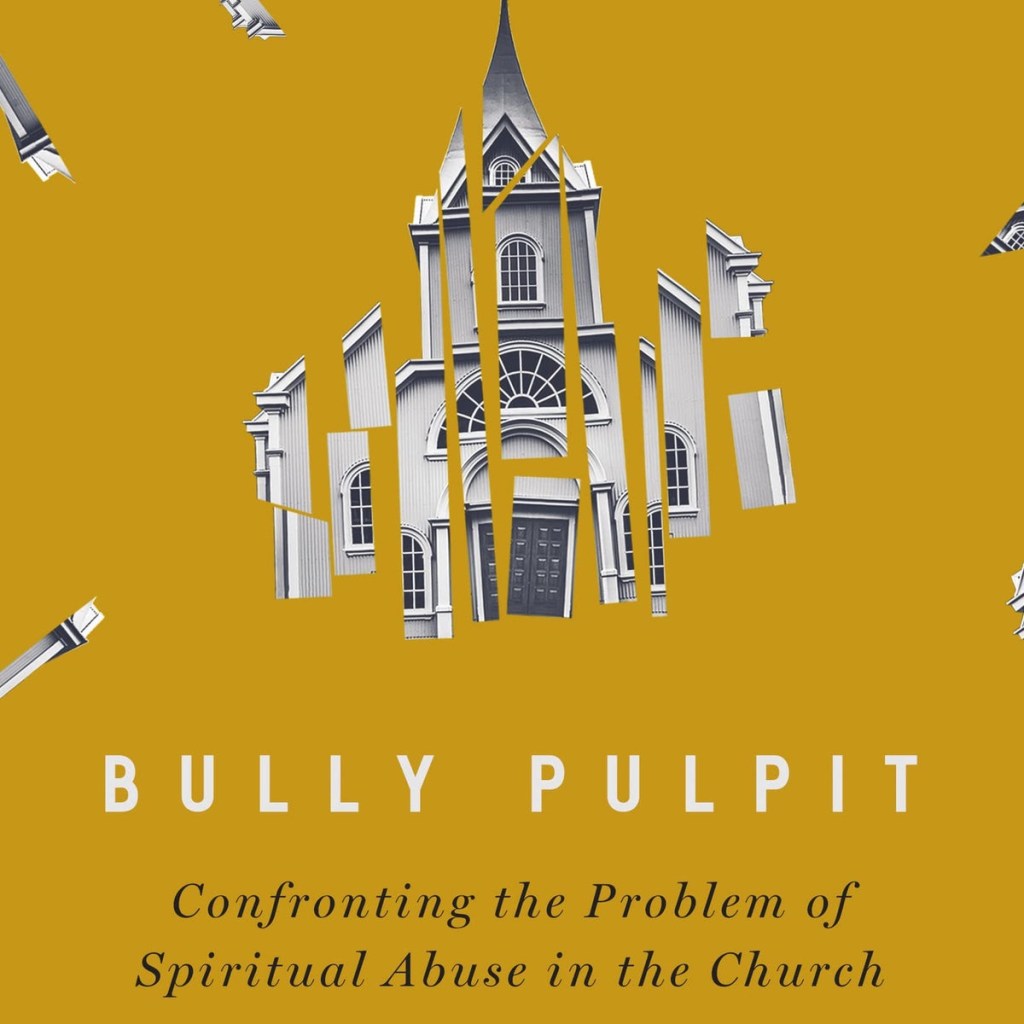
What are some ways that accountability is resisted and ultimately quenched in churches with such Leaders? In his book, “Bully Pulpit; confronting the problem of spiritual abuse in the church”, Michael J. Kruger gives a lot of evidence based explanations of how abusive Leaders structure their churches, and how they interact with those who try to hold them accountable, or even just push back on things they disagree with. Here’s just a few points he makes;
- “To snuff out criticism, an abusive pastor will often silence, shame, or isolate a person, making them feel like they are insubmissive, insubordinate, and undermining the church’s God-given leadership… This story is a classic picture of the abusive pastor. He accuses the staff member of insubordination and then makes her out to be the real problem.” (Pg 31)
- Such Leaders will turn all criticism and genuine push back as slander and malice. But claiming slander is more than a claim of innocence; it is an aggressive countercharge designed to put the investigative spotlight back on the accuser/victim (Pg 85). Claiming ‘slander’ trains the rest of the church to view criticism as automatically sinful, divisive and to be avoided.
- Leaders who intentionally avoid or dismantle accountability structures do so because they genuinely believe they are better than everyone else, more holy, more chosen, more anointed, more special… they’re just better, and won’t be questioned by inferior, less spiritual sheep (Pg 54)
- Leaders without real accountability will surround themselves with a ”chorus of yes men”, most of which a younger than the leader, whom the leader has personally mentored and pastored; “For them, the pastor is their mentor, friend, and leader whom they owe a great deal of allegiance. All they know about ministry they learned from him. In such cases, it is difficult — relationally and emotionally — to consider he could be spiritually abusive to the flock.” And that’s the point, yes men give blind allegiance and little resistance, they’re a rubber stamp for Leader to do whatever he wants. (Pg 12/13)
- Abusive Pastors paint themselves as taking the moral high ground whenever another leader or congregant brings a serious complaint. The victim is painted as having a bitter root, a grudge, and unforgiveness in their heart while the pastor minimises and diminishes any wrong doing to such a degree that Pastor can now play the victim card, claiming the real sin is that he is being undermined, slandered, gossiped about. This is called flipping the script; it’s classic narcissist behaviour (Pg 71-73)
These Leaders will talk a lot about submission, with minimal (or twisted) scripture to support it, and while they demand submission to their leadership, they refuse to submit to any form of accountability structure within the local congregation, claiming they are submitted to some oversight panel that exists outside the church, and to God (implying that they cannot therefore be challenged or questioned).
When no one within the congregation is explicitly empowered to keep the Leader accountable, and when the board is made up of yes men, the door is wide open for that good, well intentioned pastor who loves God, to slowly give into the temptation of the flesh to think of himself more highly than he ought and begin to prefer himself over others. Once this happens and humility has left the chat, leadership is no longer about sacrificial service and laying down your life but about the leader being at the top; it’s a slippery slope downhill to the misuse and abuse of power, position, and people.
What happened with Bolz and Bethel Church is that the Leaders cared more about the momentum and image of the church, their ‘movement’, and their influence in the world, more than the people they were charged with caring for. Bethel Leadership (Johnson & Vallatton) covered up for Bolz in order to protect themselves and their ministry, instead of seeking to protect the flock from a wolf and a predator.
The Good Shepherd lays down his life for the sheep, hired hands protect themselves (see John 10:12-13).
True Shepherds do not protect the abuser, they do not “tolerate that woman Jezebel”, they do not allow wolves to roam around the church freely, they do not cover the sin of platformed leaders, they expose it and rebuke them publicly so that all may learn to fear.
Every New Testament writer, at one point or another, talks about false prophets, dodgy teachers, incorrect theology and manipulative people trying to steer God’s children away from Truth. Why is addressing bad doctrine and unbiblical culture in the church such a taboo? Maybe if we talked about it more, we would have less of it.
True shepherds are willing to incur the cost, to suffer loss, and to be hurt, if it means serving and protecting the sheep entrusted to them by the Great Shepherd.
False shepherds will protect other leaders and cover for their bad behaviour in order to preserve their own ministry, or line their pockets. They have each other’s backs, talk each other up, promote and endorse one another, all while neglecting those to whom they’re truly called to serve.
False shepherds will isolate, push away and demonise critics who care about the sheep and are willing to challenge the leadership. The critiques will get labelled as divisive, slanderous and called ‘Absalom’, while the leaders accuse the critics of being jealous and wanting their position or power for themselves. It’s an old trope, and should been seen for what it is; manipulative gaslighting.
False shepherds will not expose the sin of Leaders they have platformed, nor warn the church to stay away from such Leaders, instead, they slander the critics and warn the church to stay away from them! They will not name and shame Leaders that are misbehaving, because it would hurt their ministry, they might lose peoples’ trust and their tithe. They ‘love’ the disgraced Leader and claim to want to restore them, instead of loving the church and protecting them by pointing out the sin of the Leader as scripture says to do. They protect themselves, and not the sheep. This is what Bethel did, and it’s far too common, it’s a culture of cover-up.
Humility & the Fear of God
When Paul wrote to Timothy explaining that Leaders who do not repent of sin ought to be rebuked publicly, Paul said the purpose of public rebuke was so that everyone else may learn to Fear. The Fear of the Lord is the beginning of wisdom and the key to true knowledge. It is a good thing to Fear God, and it therefore a good thing to have accountability structures in place that keep the Fear of God close by.
Just as the fear of falling and crashing will keep you away from the edge of a cliff, the Fear of public rebuke will keep you away from the edge of sin as a Leader.
Accountability structures help guard the Leader from pride, and help protect the sheep from abusive pastors, false prophets and wolves.
When a Pastor refuses to build and encourage healthy and accessible structures of accountability, they are not only providing the devil a foothold, but they are telling their congregation that they as the Leader can be trusted more than scripture, and that they as the Leader anticipate having something to hide, cover up and get away with. Accountability anticipates broken people making bad decisions, the lack of accountability is a bad decision made by a dangerous person that lacks humility and who lacks the Fear of God.
Mike Winger’s 5hr video with 1.6m views (Not recommended viewing for kids) exposed Shawn Bolz as a fraud and deviant, and it exposed the intentional cover up by Bethel Church Leadership, and other high profile leaders. This exposure is good. This is right. It vindicates the victims and it teaches other Leaders to Fear; Thank God for courageous whistleblowers who raise the alarm when accountability structures either fail, or simply don’t exist.
Pray for the body of Christ. Pray that the Good Shepherd will intervene, for the sake of his sheep, wherever the shepherds are not faithfully following Him humility, gentleness, and accountability. Pray that those who need a course correction, will respond like Peter, accepting correction and continuing to run the race marked out by Christ, pray that grace and mercy would flow to all pastors and leaders, flawed people called by the kindness of God to shepherd his people. Pray that there would be more exposure, more accountability, more cleansing, and more people being healed, saved and restored as a result of God moving in and through his Church; come, Lord Jesus.
Discover more from Seeds & Streams
Subscribe to get the latest posts sent to your email.
