
CAN’T GO OVER IT
There’s a fun story book that I loved as a boy, ‘Going on a Bear Hunt’, that describes the adventures of some children on a journey to find a bear. On each page they confront a new obstacle and the refrain is the same;
We can’t go under it, we can’t go over it, oh no! We’ll have to go through it! – Michael Rosen 1989
There are some things in life that simply must be confronted head on, and the Bible is one of them.
The culture of the world would love nothing more than for Christians to avoid the Bible, and to bypass it completely when forming opinions and perspectives. They want us to go over it, or under it, but not through it! But we _must_go through the Bible, and we must let the Bible go through us.
Consider the way the author of Hebrews describes the a word of God;
“For the word of God is living and active, sharper than any two-edged sword, piercing to the division of soul and of spirit, of joints and of marrow, and discerning the thoughts and intentions of the heart. And no creature is hidden from his sight, but all are naked and exposed to the eyes of him to whom we must give account.”
Hebrews 4:12-13 ESV
When you hear it described like that, it becomes quite understandable that someone might want to avoid it! But if you are serious about wanting to live a transformed life as a follower of Jesus, avoiding the Bible is the fastest way to short circuit the process.

We Must Reject the Bypass
When I was a kid, there were few bypasses on the highway, instead you drove through all the small towns and villages, which forced drivers to slow down and take in the sights. Now, with new bypasses built that circumnavigate each town, we can keep the foot to the floor and cruise past, slowing down for nothing, on the increasingly wide road.
Unfortunately, culture has trained most Christians to approach life the same way.
We don’t like to slow down, we just want to hit cruise control. We absorb the philosophy and beliefs of the world without blinking, we take on the mindsets and opinions of our professors and favourite podcasters, never slowing down long enough to consider if our position on key issues and relationships are being conformed to Christ’s Lordship or to culture’s influence.
A.W. Tozer is credited for saying, “If you are not intentionally formed by Christ, you will be unintentionally formed by the world”.
Too often, we simply bypass the Bible and let the culture and our personal preferences shape our beliefs and therefore our lives. Why? Because it’s easier and more comfortable to cruise on the wide open road with everyone else. We want to fit in. We want the same comforts and trophies that everyone else does. We don’t want to live counter-culturally because it’s difficult, isolating, and comes with persecution and suffering.
But a disciple of Jesus, as you would recall, is one who loves and obeys Him in all areas of life:
“And Jesus came and said to them, “All authority… has been given to me. Go therefore and make disciples…teaching them to observe all that I have commanded you. And behold, I am with you always, to the end of the age.””
Matthew 28:18-20 ESV
““If you love me, you will keep my commandments… If you keep my commandments, you will abide in my love, just as I have kept my Father’s commandments and abide in his love…. You are my friends if you do what I command you.”
John 15:10, 14 , 15
A disciple of Jesus must reject the bypass and embraces the slow, intentional searching for truth within the pages of scripture, and then obey, even if it conflicts with culture.
A disciple must be willing to let the teachings of Jesus confront their beliefs and their lifestyles; it might not be comfortable but we can’t go over it, we can’t under it, we have to go through it!

Why scripture?
The Bible is the reliable witness of God being revealed to mankind. If God did not reveal himself we would not have any way of knowing him, since he is otherwise beyond our reach. We cannot simply choose to think our way to God, nor can we travel to where he is and see him. We cannot peel back the curtain of reality to find him as if he was the wizard of Oz. No, the only way we can ever know God is if he chooses to reveal himself to us and to our natural human faculties. Thank God he has!
Scripture is the record of God revealing himself to people since the beginning of creation, starting with Adam and Eve, to Abraham, Israel, and through to Jesus’ own life, death and resurrection. The Bible is a collection of 66 books, by over 40 authors, spanning thousands of years while being one consistent narrative of God making himself known to us, pursuing us, and saving us.
What is fascinating, is that for thousands of years archaeologists and historians continue, to this day, to affirm the events, places and people spoken about in the Bible. The more we learn and uncover, the more the Bible is confirmed as reliable, authentic and unchanging. It really is a miracle book!
If God has revealed himself through scripture, and then more fully through Christ, then we would be foolish to ignore both the record of God revealing himself, and the record of Jesus’ life and teaching. While it is possible to know the Bible and not know God, and it is possible to know the Bible and fail to know Jesus, you cannot know God, nor Christ, apart from knowing scripture.
Logically, it would be impossible for someone to be a true disciple of Jesus if they bypass scripture, for to be a disciple of Jesus is to seek to be like Him and to obey His commands.
I won’t labour the point. I’m going to assume that you don’t need convincing that the Bible is the authoritative Word of God. I’m also going to assume that you already accept that your life, as a Christian, should be shaped and directed by the teachings of Jesus, and the Apostles.
Side note: If, however, you are unsure if the Bible is reliable or authentic, or if it’s been translated properly, I recommended your check out Wes Huff’s YouTube series, ‘Can I trust the Bible’ where he examines the history of the Bible, the archaeology, textual criticism, and so much more.
Scripture has authority over us
“All Scripture is breathed out by God and profitable for teaching, for reproof, for correction, and for training in righteousness, that the man of God may be complete, equipped for every good work.”
2 Timothy 3:16-17 ESV
Scripture, says the Apostle Paul, is not just the record of God being revealed, it’s actually God’s own breathed out words on paper. As Peter says, the human writers of the Bible were being ‘carried’ by the Holy Spirit, swayed and influenced by God’s Spirit to write what they did, how they did, to who they did (2 Peter 1:21). It’s what Christians call the ’Inerrancy of Scripture’; the Bible is the True Word of God.
Scripture is not just the words or opinions of men, even though they were the physical authors, God was the one breathing on every word; it’s His Word, and His word is profitable for us when we embrace it.
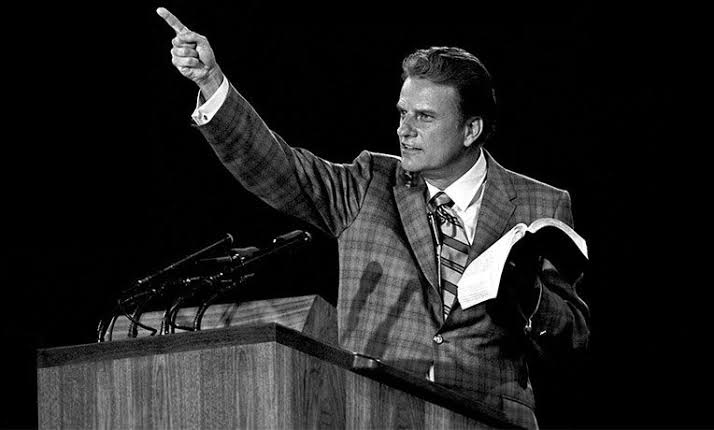
Letting scripture speak First and Last
Jesus did not tell His disciples to make converts, gather crowds, or win arguments. He didn’t instruct them to get people to ‘make a decision’ to follow Jesus or to merely ‘invite Jesus into their hearts’. Jesus told them to make disciples, teaching them to obey everything He commanded.
That word obey sits uncomfortably in modern Christian language. We prefer words like journey, process, or dialogue. Obedience sounds rigid. It sounds controlling. It sounds like something that belongs to another era, or in a cult. This is the effect that culture can have on language; obedience and submission are not dirty words. This might be a shock to some who have never read the teachings of the Bible, but a Christian is someone who embraces complete submission and obedience to Jesus; He is the Lord our God, King of the Universe.
In the original Greek, the word obey is τηρέω / tēreō which means, to continue to obey orders or commandments—‘to obey, to keep commandments, obedience.’(FN1) It can also mean to guard, watch over, or keep. It implies keen, and careful, observation and obedience to a set of commands from a higher authority. When Jesus commands us to obey, that’s exactly what he means; obey.
Jesus did not soften it.
He did not apologise for it.
He tied discipleship directly to obedience, not as a burden but as an expression of love.
“If you love Me, you will keep My commandments.” (John 14:15)
This is where true discipleship begins, and this is also where we often, and quietly, go wrong.
Not because we reject the Bible outright. Most Christians who drift here would never say that Scripture is unimportant. The problem is more subtle. The danger is when we keep the Bible close, like a consultant we use if we need to, but we don’t seek it first, and no longer let it speak last. When Scripture no longer has the final word we find ways to bypass it instead of going through it.
Ask yourself: When it comes to forming opinions, are you more likely to say, “well I just feel that…” or do you say, “well the Bible says…”?
It’s like the rich young ruler, he obeyed all the commands in scripture that he found palatable, but when Jesus pressed him on the real idol in his heart, his wealth, he went away sad and refused to repent (Matthew 19:16-30).
Jesus’ commands didn’t ‘feel’ right to him. So he bypassed the command.
He bypassed Jesus.

Christ and the Rich Young Ruler by Heinrich Hofmann
The Quiet Art of Bypassing Scripture
When we talk about bypassing the Bible, I’m not talking about ignoring it altogether. Rather, it is usually an approach to scripture having already decided what Jesus must say.
That rich young ruler was looking for a pat on the back, not an actual challenge to his loyalty and love. He wanted a crown, not a command.
Too often we come to scripture like that young man came to Jesus, with settled conclusions, emotional commitments, cultural instincts, personal stories, or philosophical frameworks. We have an opinion and then we look for verses to validate it, and ignore the ones that contradict us.
We open the Bible, not to be corrected, but to be confirmed.
Scripture becomes ‘supporting-evidence’ rather than the governing authority.
We seek affirmation, not transformation. We use the Bible to shore up our position instead of yielding to its authority to change us more and more into the image of Christ.
Preachers do this too when they have a point or message in mind, then go looking for scriptures to validate their position. These are often called ‘topical’ sermons. It doesn’t automatically mean such sermons are incorrect, or that the sermon is not accurate or helpful, but this type of preaching has the potential to unconsciously train a congregation to approach scripture the same way, except the laity rarely has the adequate years of theological training behind them to avoid interpretation pitfalls. Sermons don’t just transmit scriptural truth, they train the people how to approach scripture.
SEEKING CONFIRMATION
This bypass approach can also be called ‘confirmation bias’; this is defined as the tendency to process information by looking for, or interpreting, information that is consistent with our existing beliefs.
It’s when we look for evidence to prove we are already right, instead of assuming we still have something more to learn and letting scripture speak for itself.
This bypass-approach to the Bible is so subtle, so subconscious for many, that it causes obedience to feel optional. Not because Jesus or the Apostles were unclear in what they said, but because we have quietly relocated authority away from scripture and to ourselves, and to what feels right.
The rich young ruler did exactly this and Jesus confronted him head on, but notice that in the passage we’re told Jesus ‘looked at him, and loved him’. It’s not unkind or unloving to speak the truth of scripture, as long as the motive is formation and not condemnation.
The danger is, we can be believe with all our might, and still be wrong; the Pharisees are proof enough of that, but true discipleship is not built on sincerity of belief.
You can be truly sincere and still deeply resistant to being taught. The demons sincerely believe God exists, but they reject Him as Lord. The difference for us is that our sincerity needs to be rooted in the willingness to change and to obey Jesus commands.
Scripture confronts this problem again and again. Israel sincerely believed they were faithful, even while reshaping God’s commands to suit their comfort. The Pharisees memorised Scripture, taught Scripture, and defended Scripture, yet Jesus told them they nullified the word of God by their traditions. They did not abandon the Bible. They bypassed it, and in doing so, they rejected the Author.
True discipleship is not synonymous with sincerity of belief, but in submission to the teachings of Jesus who said, “Teach them to obey”.
Submissive or Selective?
Modern Christianity often defines love as affirmation; the world certainly does!
Jesus defines love for God as obedience. So when you seek to truly be a disciple of Jesus, it becomes inevitable that these two contrasting definitions will eventually collide.
Obedience does not mean blind compliance or mindless rule keeping. Biblical obedience is relational. It flows from trust. It assumes that God is wiser than we are, even when His commands disrupt our instincts. It flows from knowing just how good God really is, ‘slow to anger and abounding in love and faithfulness’.
His ways are higher, and his ways are always good, always just, always right.
This is why Jesus repeatedly ties obedience to love. Not because obedience earns love, but because love trusts enough to obey. I’ll say it again, love trusts enough to obey.
When we know the heart of the God who gave His only Son to save and redeem us, trusting His motives and intentions becomes easy because He has proven beyond measure that He is good.
“Once God has spoken; twice have I heard this: that power belongs to God, and that to you, O Lord, belongs steadfast love…
Psalm 62:11-12 ESV
Obedience is trusting along with the psalmist, that God is indeed all powerful, and He is also steadfast in love. He can be trusted to act for our good and on our behalf (Rom 8:28).
Disobedience, on the other hand, is the same as telling God, “I don’t trust you, I’m not convinced you are good, so I am going to trust my own judgement in this matter”.
It’s Eve eating from the tree all over again. It’s Frank Sinatra singing, ‘I did it my way’.
When we bypass Scripture, what we are really doing is protecting something we love more than Jesus.
Sometimes that is comfort.
Sometimes reputation.
Sometimes our own sense of justice.
Sometimes a cultural vision of what goodness must look like; what feels right in our own eyes.
But when we submit to the goodness of God, without understanding why He commands certain things, we demonstrate our trust in Him and He receives that as an expression of our love for Him; true worship.
Discipleship, isn’t cheap or easy, it demands something costly. It asks us to place even our strongest convictions on the table and say, “If Scripture corrects me here, I will yield.”
This is what it means to take up your cross daily, it’s to let the man of flesh die so the new man can thrive. To invite scripture to correct and transform you is the prayer of all true discipleship, and while it is a dangerous prayer, it is also the beginning of wisdom; the Fear of the LORD.

Experience Is a Poor Master
One of the most common ways we bypass the Bible is by appealing to experience.
- “I saw good fruit” – so that style of ministry must be approved by God.
- “This helped people” – so it must be correct theologically.
- “I was healed here” – so my doctrine must be sound.
- “I was saved through this” – so God clearly has no issues with that church.
- “That person is so gifted” – so God must approve of their position
A brief survey of the 7 letters to the 7 churches in Revelation shows us that Jesus had good and bad things to say. The presence of good things, or good fruit, does not equate to the absence of anything needing change. In an extreme example, the fruit of Ravi Zacharias’ ministry is evident in the lives he impacted, but behind closed doors he was committing horrendous acts of abuse. Impact in ministry does not make his behaviour acceptable to God. Ravi presumed God was okay with his behaviour because his ministry was bearing fruit. But scripture would strongly disagree with him.
Personal experience certainly matters. Scripture never denies that. But experience is never allowed to function as final authority. Scripture interprets experience, not the other way around.
Jesus warned that many would do powerful works in His name and still be unknown to Him (Mt 7:22). Fruit alone is not proof of faithfulness, and impact is not the same thing as obedience. Imagine if Jeremiah’s ministry as a prophet was measured by fruit or impact, he would be deemed a failure and a false prophet!
For example: Maybe someone saw great fruit in reaching the lost in their first year as a Christian, so they assume they ought to start a church immediately. But scripture says an Elder ought not be a recent convert, and Paul warns that promoting people into leadership roles in the church has the potential to destroy them if they’re not spiritually mature enough to resist becoming conceited.
“He must not be a recent convert, or he may become puffed up with conceit and fall into the condemnation of the devil.”
1 Timothy 3:6 ESV
Such person may have the ‘experience’ of being successful in ministry, but if scripture is allowed to speak last, this person ought not be given a leadership role due to his recent conversion. Paul has a lot to say about who should and who shouldn’t have Eldership/Pastoral positions, much of which culture would reject.
When experience becomes a decision making mechanism, discipleship subtly shifts into subjectivity. We stop asking what Jesus commanded and start asking what seems to work. That shift feels compassionate. It often feels loving, and it almost always feels progressive and enlightened. But it slowly hollows out obedience until it becomes a negotiable value.

When Culture Sets the Boundaries
Another way we bypass Scripture is by allowing cultural assumptions, and so called ‘social constructs’, to define what God is “allowed” to say. I won’t get into it here (for now) but the obvious topics are things like gender identity, gender roles, marriage and sexuality, etc. Culture has some extremely strong opinions on all these things, but so does God.
Some of the ideas and opinions we might have can feel so self evident that questioning them feels immoral, making submission feel inherently oppressive. But their self evidence is only due to new cultural norms, not Biblical patterns. In these cases, authority feels inherently abusive, and limitations feel inherently unjust. Notice how much of that was about how things ‘feel’?
How is it possible that some churches now affirm homosexuality, even among “pastors”, when scripture has been clear on the issue all along? Because culture created a counter narrative, and then affirmed the goodness and acceptability of homosexuality as a self evident truth. Then, it held up the Bible and called it archaic, bigoted and outdated. Christians then had to decide who gets the last word; culture, or scripture?
Feelings are fickle, and scripture will consistently challenge our cultural assumptions and personal bias, and we must continue to let it do so.
If we begin with the assumption that certain concepts, or aspects of our lives, are morally acceptable, and that God is already ‘on our side’, scripture loses its ability to surprise us because we will only ever look for affirmation.
We will reinterpret, soften, or sidestep any passage that threatens our starting point. We become like those James warns us about, looking in the mirror of scripture but immediately turning aside and forgetting who we are.
This approach to scripture is not discernment. It is a pre commitment to being shaped by culture instead of by Jesus, preferring to be appealing and pleasing to the world, instead of to Christ.
True discipleship begins with the humility to say, “I may be wrong.” Not about everything, but about anything scripture addresses.

Stories That Silence Scripture
Stories are powerful. They move us. They shape us. They awaken compassion. But stories are also dangerous when they become interpretive trump cards. In the same way ‘experience’ should not get the final word on whether something is right, our story should also be handled with care.
For example, when the pain we’ve experienced becomes the proof that our theology is correct, scripture is silenced. When the abuse we went through becomes the decisive argument, ‘case closed’, careful theology becomes impossible because the only thing that is closed is our ears to word of God.
Church hurt is real, but scripture still clearly expects us to gather, belong, serve and be submitted to a local church. We can’t use our story as a reason to ignore scripture.
Scripture never denies the reality of harm. Jesus tells us to expect it. What we find is that through the Bible, God speaks directly to injustice, violence, and oppression, but the existence of such things does not allow human failure to rewrite divine instruction. God’s word is still greater than our story. My truth might be true enough, but God’s Truth is transcendent, and I need to make ‘my truth’ subject to His.
Discipleship requires that instead of clinging to our stories and our pain, we submit them into the redemptive hands of the Father to be rewritten. When we bypass Scripture to protect ourselves from past pain being repeated, we hijack God’s plan to redeem and renew by sidestepping the very mechanisms designed to lead us into supernatural transformation. We must submit our story to Jesus, and let his word lead us into healing and freedom.

TRANSLATION BIAS
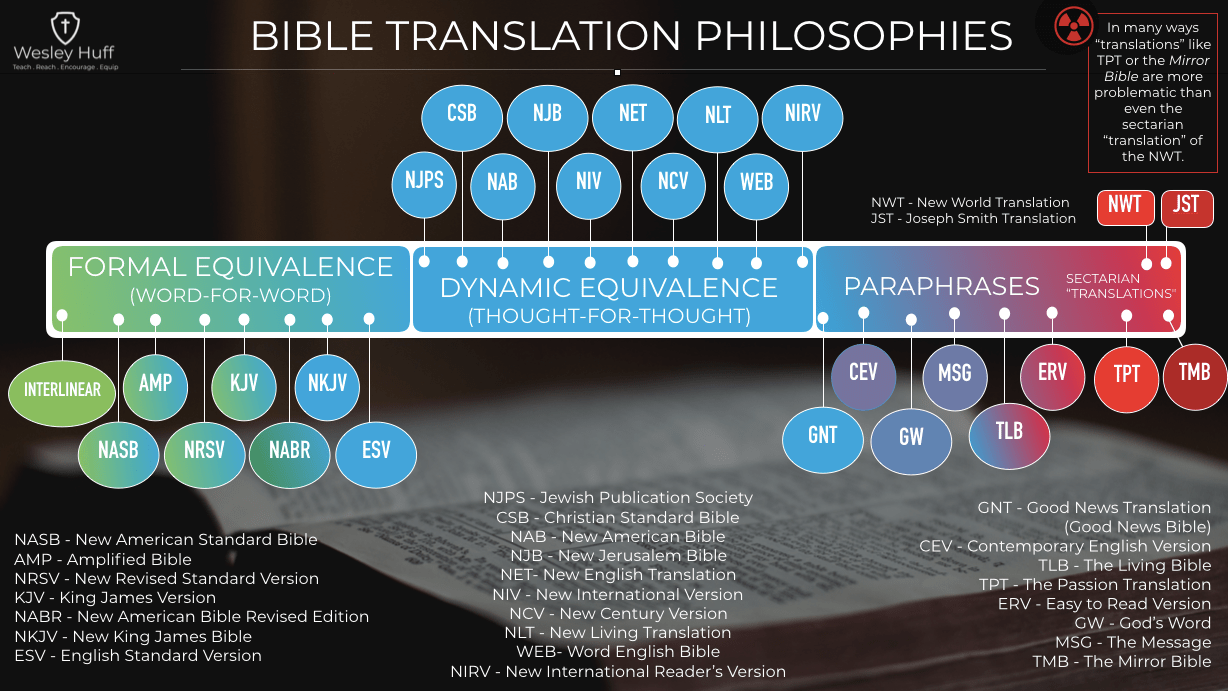
Another common way we bypass the scripture, ironically, is in the way we choose Bible translations. If we come across a difficult scripture, one that confronts our beliefs, and we go searching through multiple translations until we find one that ‘sounds better’ or ‘sits right’ we are playing a dangerous game.
Using a variety of translations is good, it’s encouraged, but we need to be careful we’re not practising confirmation bias when we do. Using ‘easy-to-read’ translations is good at times, as they often avoid using what some may call ‘academic’ language. The problem is, if sermons and teachings are regularly presented with these simplified translations, those preachers never need to demonstrate and model to their congregation how to exegete the scriptures for themselves. For example, The NLT and the GNT are both good readers, but they no longer use words like justification, sanctification and propitiation which are loaded with rich theological meaning.
Using a paraphrase for casual reading is fine, but it’s not a good place to start when studying scripture. Personally, I love Eugene Peterson’s ‘The Message’, but I treat it like a non academic Bible commentary, to me it’s the opinion of a great pastor and teacher, but it’s not the Bible.
Any single-translator versions of the Bible, like the Mirror Bible or Passion Translation (TPT), are so full of sectarian language and confirmation bias, they should be rejected outright and not used at all. They’re dangerous, misleading, and no widely respected scholar accepts them as valid Bible Translations, quite the opposite.
Wes Huff even says, “In many ways, “translations” like the TPT or Mirror Bible are more problematic than even the sectarian “translation” of the NWT”. In case you’re wondering, the NWT is the New World Translation, also known as the Jehovah’s Witness Bible.
When we reject the wisdom of a multitude of scholars on an issue like this, because we love the ‘Mirror’ or we love the ‘Passion’, we are demonstrating an extremely high confirmation bias and playing with fire.
Obedience Without Selective Hearing
One of the clearest signs that we are bypassing the Bible is selectivity. It’s like a steady diet of topical sermons but the topic of your dysfunction and sin is never on the schedule, we bypass those Sundays!
When we pick and choose which scriptures we ‘like’ and which we ‘agree with’, we close our eyes and ears to the passages that are confronting. Instead, we gravitate toward verses that confirm our instincts and avoid those that demand careful wrestling. Our confirmation bias operates like a lane departure warning and keeps us on the bypass lane heading away from our deepest needs.
Scripture is medicine, it’s healing, it’s nourishment for our soul. The thing our sick and hurting hearts needs most is rarely found on the bypass, but in the mirror of the Word. Wide is the road that leads to destruction, but narrow is the road that leads to life. The bypass leads to the wide road.
Jesus did not say to the apostles, “Make disciples and teach them to obey only the parts they find most affirming.” He said teach them to obey. And he meant it.
Obedience shaped by the whole counsel of God is slower, humbler, and far less convenient. It’s like taking the winding road through the hills and villages. It’s walking instead of driving. It requires patience, context, prayer, and sometimes the willingness to live with tension. You can’t fake it and you can’t hide. Transformation takes work, even though it is completely dependent upon grace. This is the process of becoming, of being a disciple.
This is also why discipleship cannot be reduced to slogans and short courses. Real lasting transformation must be formed through sustained exposure to Scripture, not curated fragments and the ‘verse of the day’ on your phone’s Lock Screen.

The Cost of Letting Scripture Lead
There is a cost to refusing to bypass the Bible. The rich young ruler wasn’t willing to pay the price. The apostles did. They left homes, boats, business, family, safety, wealth, status… In this current climate, following Jesus’ commands can be costly;
It may cost you certainty, as scripture challenges long held beliefs.
It may cost you approval, as obedience to God might mean losing favour with men.
It may cost you alignment with your tribe, if obedience means no longer holding once held views.
It may cost you opportunities, if your obedience isn’t what’s trendy.
It may cost you relationships, if obedience requires a change they’re not willing to make with you.
But obedience will form you into someone who actually knows Jesus, not just about Him.
Into someone who sounds, acts, speaks, and loves more like Jesus every day.
When discipleship is embraced as ‘obedience rooted in love’, it produces a different kind of Christian. Not loud. Not defensive. Not reactionary. But one who is deeply anchored, secure, meek, faithful, courageous, and truly loving.
This kind of disciple does not fear scripture, they feed on it. They do not rush to explain it away but take time to marinate in it, meditating on it day and night. They trust that whatever God commands is ultimately good, even when it cuts against their instincts or confronts their sacred cows, in fact, they invite it to do just that!
They believe that Jesus is not merely kind, but wise, not merely saviour, but LORD.
Disciples Still Expect to Be Corrected
One of the most dangerous moments in the Christian life is when we stop expecting Scripture to correct us.
True disciples remain teachable. Not because they lack conviction, but because they know where the authority of scripture comes from, and they know that they will always be a work in progress; transforming from strength to strength and from glory to glory until they day they die.
They do not ask, “How can I make the Bible agree with me?”
They ask, “What must I change to agree more with Christ?”
That question is the heartbeat of discipleship, it doesn’t ask out of insecurity or anxiety, as if needing to prove itself or earn God’s love. No. It’s a the passionate pursuit of the disciple responding to the Lords invitation to follow, crying ‘Teach me Lord, that I might be more like you’.
A Final Invitation
Jesus does not coerce obedience. He invites it. “Come, follow me”, he says. He does not threaten those who struggle, rather He offers us grace, while at the same time He warns those who refuse to listen. Are we stiff necked, or easily steered by the voice of the shepherd?
If we are serious about making disciples, beginning with ourselves, then we must recover a reverent, submissive posture toward Scripture.
Not defensive.
Not selective.
Not pre edited.
Not seeking confirmation.
We open the Bible not to be affirmed, but to be formed and shaped by the very word of the Creator.
And when Scripture confronts us, as it inevitably will, we do not bypass it; as disciples, we yield and we follow, even if it means leaving the wide, easy road of culture and acceptance, so that we can truthfully call Jesus ‘Lord’ and not be found out to be liars.
““Why do you call me ‘Lord, Lord,’ and not do what I tell you? Everyone who comes to me and hears my words and does them, I will show you what he is like: he is like a man building a house, who dug deep and laid the foundation on the rock. And when a flood arose, the stream broke against that house and could not shake it, because it had been well built. But the one who hears and does not do them is like a man who built a house on the ground without a foundation. When the stream broke against it, immediately it fell, and the ruin of that house was great.””
Luke 6:46-49 ESV
Reflection Questions:
- How would you describe your approach to scripture?
- Do you invite and expect the Bible to challenge and correct you regularly?
- What areas in life have you made ‘off-limits’ to the voice of scripture?
- Do you study scripture, or just read it?
Footnotes:
[FN1]: Louw, Johannes P., and Eugene Albert Nida. 1996. In Greek-English Lexicon of the New Testament: Based on Semantic Domains, electronic ed. of the 2nd edition., 1:467. New York: United Bible Societies.
Discover more from Seeds & Streams
Subscribe to get the latest posts sent to your email.
