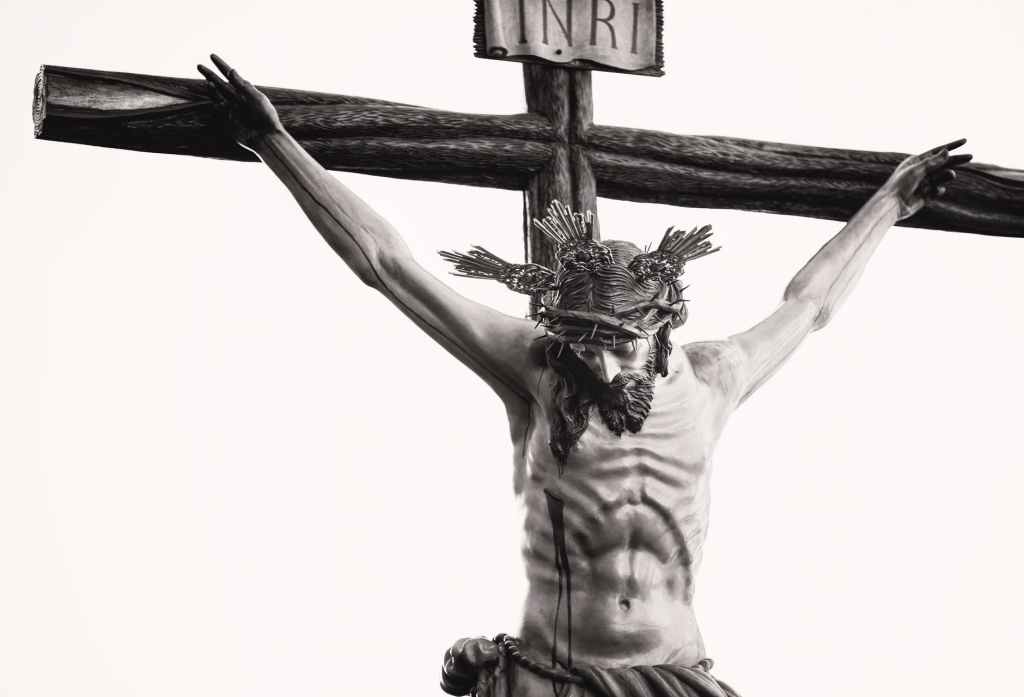
I once heard someone say that Jesus paid the devil so we could be set free from his grip on our life, but is that true?
One of my favourite songs is Stuart Townend’s, “How Great The Father’s Love For Us”, with one of the stanzas reading,
“Why should I gain from His reward?
I cannot give an answer
But this I know with all my heart
His wounds have paid my ransom”
In 2014 the Newsboys released a new version of Elvina Hall’s 1865 hymn, “Jesus paid it all”, and Kim Walker-Smith covered the same song in 2019 with the recognisable lyrics,
Jesus paid it all
All to Him I owe
Sin had left a crimson stain
He washed it white as snow
A quick google search will bring up a shortlist of songs titled, “Jesus Paid it all” – and there are dozens more. The phrase is so common it just rolls off the Christian tongue… Jesus paid it all. But what do we mean, and who got paid?
the what before the who
To understand who got “paid”, we are better to first consider what transaction was actually taking place. In the language of payment and purchase, what was Christ paying for? Townend said Jesus paid his ransom.
the Son of Man came not to be served but to serve, and to give his life as a ransom for many
Matthew 20:28
Jesus himself said that the giving of his life would be as a ransom for many.
When we think of a ransom, we might think of a payment being made in a hostage situation. The hostage-takers demand payment, a ransom, in order to release the hostages. So a good question to consider is, were we held hostage by someone or something? Is there a hostage-taker that Jesus had to pay to secure our release? Let’s take a look…

RANSOM: λύτρον (lytron)
The Greek word used by Jesus (Matthew 20:28 & Mark 10:45) is λύτρον (lytron).
Deissmann (LAE, pp. 331f.) points out that lytron (“ransom”) was most commonly used as the purchase price for freeing slaves; and there is good evidence that the notion of “purchase price” is always implied in the NT use of lytron (cf. esp. Morris, Apostolic Preaching, pp. 11ff.). Others, however, by examining the word in the LXX conclude that, especially when the subject is God, the word means “deliverance” and the cognate verb “to deliver,” without reference to a “price paid” (see esp. Hill, Greek Words, pp. 58–80).
D. A. Carson, “Matthew,” in The Expositor’s Bible Commentary: Matthew, Mark, Luke, ed. Frank E. Gaebelein, vol. 8 (Grand Rapids, MI: Zondervan Publishing House, 1984), 433.
In general, the word being used does draw on the image of a transaction taking place to secure someone’s release, the payment made to slave owners, it’s the price of their deliverance or freedom. But is Jesus using the word to highlight that someone is being paid, or that the freedom and deliverance of the ‘many’ can only come at a price, and that he was willing to pay it? Remember, the context within which this comment was made by Jesus was to do with serving, not being served. He is contrasting the way of the world, which is to climb to the top and make others serve you, against the way of his Kingdom, which is to become the servant of everyone (Mark 9:35). Jesus didn’t come to get paid to set us free, he came to pay the price himself.
I believe the emphasis is on the cost of our redemption, rather than who might be being paid. How we determine this is by considering the other language used to describe what Jesus’ death on the cross was achieving. Good doctrine considers the whole of scripture, not just a single word or verse.

REDEMPTION – it ain’t free
Ransom and redemption are very similar in terms of concept and thought. Just as a ransom is paid to rescue a hostage, you can say that a ransom is paid to redeem a hostage. To redeem is to recover, to restore, to get it back. When you pawn something at a pawnshop, the only way you can get your item back is to pay the agreed price. This process of paying to get it back is called redeeming. You redeem your item. You get it back.
Redemption is the major thread that runs through the entire Biblical narrative, so much so that you might call the Bible the story of redemption; God getting us back, God reclaiming us, recovering us and restoring us to himself.
When the Lord rescued Israel out of Egypt, setting them free from slavery, He told them they were being redeemed (Exodus 6:6) by his great power. Throughout the laws of Moses, we find that God’s people were to offer a lot of sacrifices. But some animals, instead of being sacrificed, their lives could be spared and instead a payment could be made. To do this was to redeem the animal (Exodus 13:13, Numbers 18:15). People could be redeemed, land could be redeemed, all kinds of things could be recovered, restored and returned to their owner through this act of redeeming.
The story of Ruth finding a husband, Boaz, and no longer having to live a widow is literally described as redemption. 11 times in the book of Ruth the word redeem or redeemer (the one doing the redeeming) is used to describe what is happening.
Redemption is the main theme of the bible and God is our redeemer
For your Maker is your husband, the Lord of hosts is his name; and the Holy One of Israel is your Redeemer, the God of the whole earth he is called (Isaiah 54:5)
Christ redeemed us from the curse of the law… (Galatians 3:13)
In [Christ] we have redemption through his blood, the forgiveness of our trespasses, according to the riches of his grace… (Ephesians 1:7)
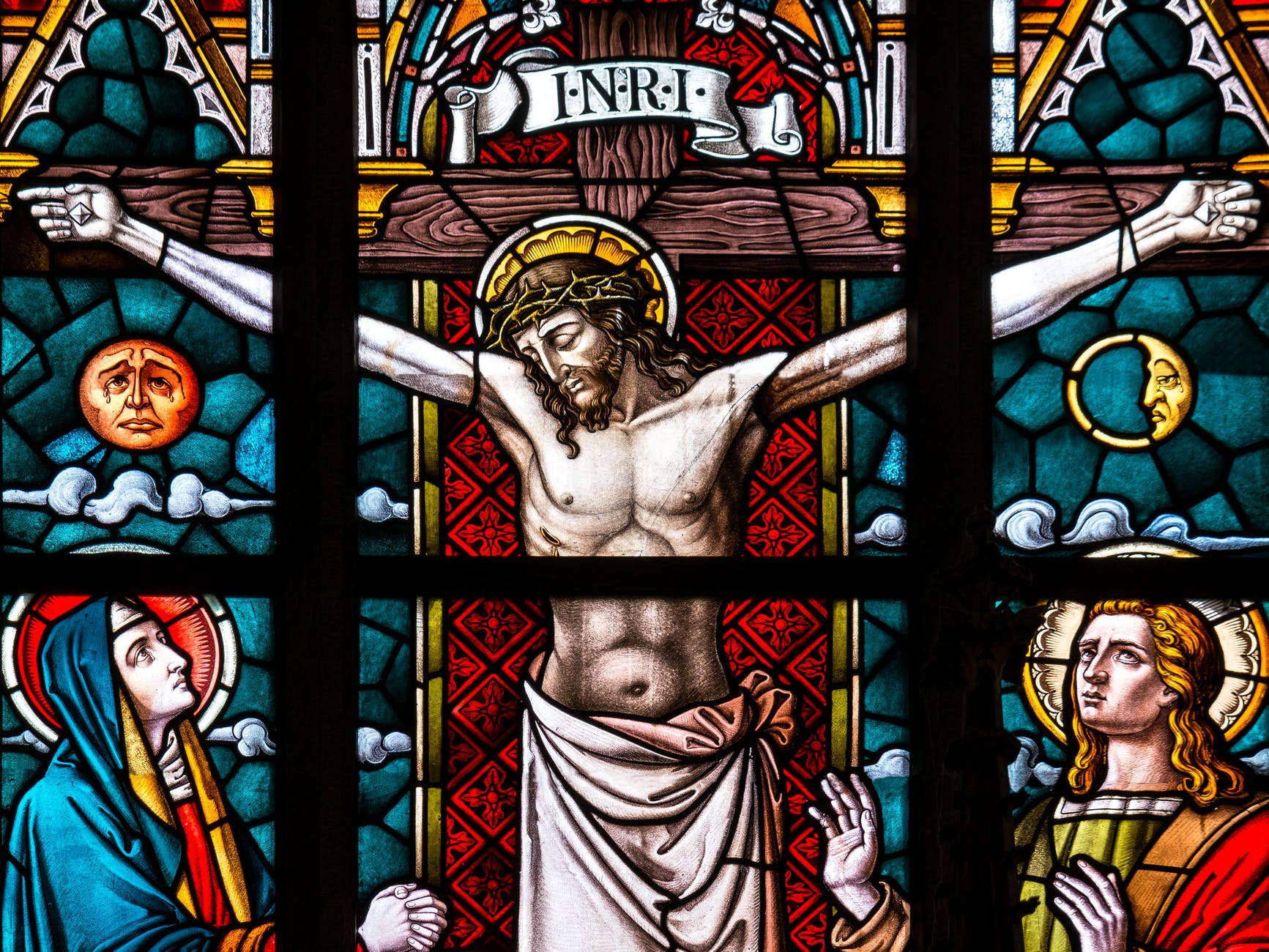
Jesus’ life, his blood, was the cost of our redemption
A quick survey of scripture plainly shows us that the blood of Jesus spilt on the cross was and is the ‘payment’ – the cost, the price of our redemption. Jesus paid the ransom in blood, it was his life for ours. In John’s revelation vision, he hears a song being sung to Jesus, who he sees in the image of a slain lamb, “Worthy are you to take the scroll and to open its seals, for you were slain, and by your blood you ransomed people for God from every tribe and language and people and nation…” (Revelation 5:9)
So now that we know what was purchased, our redemption, let’s return to the original question at hand, who got paid?
if his blood was the price, who got “paid”? to whom was the ransom given?
The ancient practice of redeeming animals or people in Israel was to sacrifice an animal in its place. Every firstborn animal was to be offered to the Lord, but a newborn donkey could be redeemed by the life of a lamb. The donkey is spared and the lamb is sacrificed in its place. No one is “given” the lamb, it is sacrificed to the Lord as an offering. Blood is presented to the Lord and the redemption process is completed.
Every year the high priest would have to present blood for his own sins and then for the sins of Israel. This was for the atonement, or redemption, of the nation of Israel. This is important for understanding our question because this act of atoning and redeeming is the shadow of what Christ was to do on the cross.
Jesus would be the greatest high priest, he would offer blood before the Lord, but not the blood of animals, rather he offers his own blood. Pure. Undefiled. The blood of the Son of God. And because his blood was pure and holy, it would only need to offered once. Once and for all.
Let’s read Hebrews 9:11-14
11 But when Christ appeared as a high priest of the good things that have come, then through the greater and more perfect tent (not made with hands, that is, not of this creation) 12 he entered once for all into the holy places, not by means of the blood of goats and calves but by means of his own blood, thus securing an eternal redemption. 13 For if the blood of goats and bulls, and the sprinkling of defiled persons with the ashes of a heifer, sanctify for the purification of the flesh, 14 how much more will the blood of Christ, who through the eternal Spirit offered himself without blemish to God, purify our conscience from dead works to serve the living God.
His blood was offered to the lord, not the devil
In the same way that the earthly priests offered blood sacrifices to the Lord in the temple built with human hands, Jesus offered his own blood in the heavenly temple – the truer holy of holies – and presented it to the Lord.
Jesus did not pay the devil. The devil was defeated, not paid.
Jesus didn’t just pay it all, he did it all.
God needed to judge sin, so he did, in Christ, on the cross.
God needed to redeem humanity, so he did, through Christ, on the cross.
God needed to satisfy his wrath against sin, so he did, against Christ, on the cross.
God needed to punish sin, so he did, in Christ, on the cross.
Christ Jesus is the image of the invisible God, the fullness of the Godhead dwelling in the flesh. Son of Man and Son of God. Human yet Divine. Father, Son & Holy Spirit, three yet One.
God paid himself. God paid the price himself. God did it all. Christ has done it all and the devil is defeated, dethroned, disarmed and judged, soon to be thrown into the lake of fire. The devil wasn’t paid, he was defeated.
For Christ has entered, not into holy places made with hands, which are copies of the true things, but into heaven itself, now to appear in the presence of God on our behalf. 25 Nor was it to offer himself repeatedly, as the high priest enters the holy places every year with blood not his own, 26 for then he would have had to suffer repeatedly since the foundation of the world. But as it is, he has appeared once for all at the end of the ages to put away sin by the sacrifice of himself. 27 And just as it is appointed for man to die once, and after that comes judgment, 28 so Christ, having been offered once to bear the sins of many, will appear a second time, not to deal with sin but to save those who are eagerly waiting for him. (Hebrews 9:24-28)
JESUS PAID IT ALL
1 I hear the Savior say,
“Thy strength indeed is small,
Child of weakness, watch and pray,
Find in Me thine all in all.”
Jesus paid it all,
All to Him I owe;
Sin had left a crimson stain,
He washed it white as snow.
2 Lord, now indeed I find
Thy pow’r and Thine alone,
Can change the leper’s spots
And melt the heart of stone.
Jesus paid it all,
All to Him I owe;
Sin had left a crimson stain,
He washed it white as snow.
3 For nothing good have I
Where-by Thy grace to claim;
I’ll wash my garments white
In the blood of Calv’ry’s Lamb.
Jesus paid it all,
All to Him I owe;
Sin had left a crimson stain,
He washed it white as snow.
4 And when, before the throne,
I stand in Him complete,
“Jesus died my soul to save,”
My lips shall still repeat.
Jesus paid it all,
All to Him I owe;
Sin had left a crimson stain,
He washed it white as snow.
– lyrics by Elvina Hall
More articles you may be interested in:

We’ll have to go through it!
CAN’T GO OVER IT There’s a fun story book that I loved as a boy, ‘Going on a Bear Hunt’, that describes the adventures of some children on a journey…


Make Disciples; what did Jesus mean?
The final words Jesus spoke to His disciples were not rushed, sentimental, or abstract. They were spoken by the risen Lord, standing on the far side of death, addressing men…
When Jesus goes flipping mad
I was watching the new season of the Chosen this week, it was the episode where Jesus enters the Temple and breaks out a whip… he goes Old Testament on…
Discover more from Seeds & Streams
Subscribe to get the latest posts sent to your email.
